



Daniels Seventy Weeks Understanding the Backbone of End Times Theology
Daniel’s seventy weeks is one of the most remarkable prophecies in the Bible — a precise timeline given 500 years before Christ that predicted the coming of the Messiah and outlines God’s plan for the end times. Many theologians call it the backbone of end-times prophecy because so much of biblical prophecy hangs on its framework.
If end-times theology feels confusing, Daniel 9 is the place to start. In just four verses (Daniel 9:24-27), the angel Gabriel lays out 490 years of God’s plan for Israel and Jerusalem — from rebuilding the city to the coming of Christ to a final seven-year period still in our future. Below is a clear, step-by-step explanation written for everyday believers.
What Are Daniel’s Seventy Weeks?
What are Daniel’s seventy weeks? They are a prophecy in Daniel 9:24-27 in which the angel Gabriel tells Daniel that seventy “weeks” — seventy sevens of years, totaling 490 years — are decreed for Israel and Jerusalem to complete God’s redemptive plan. The 490 years divide into three parts: 7 weeks (49 years) to rebuild Jerusalem, 62 weeks (434 years) until the Messiah comes, and 1 final week (7 years) of end-times events. For deeper study, read an explanation of the seventy weeks or Daniel 9 in full.
The Hebrew word for “weeks” literally means “sevens.” In context, these are sevens of years — so 70 sevens equals 490 years. Think of it as God’s prophetic calendar for His people and His holy city.
The Context: Daniel’s Prayer (Daniel 9:1-23)
The prophecy did not come out of nowhere. Daniel was an old man in Babylon, reading the prophet Jeremiah and realizing Israel’s 70-year exile was nearly over. Instead of just celebrating, Daniel did what he always did — he prayed. Daniel 9 contains one of the most beautiful prayers in the Bible: Daniel confesses Israel’s sins, appeals to God’s mercy, and pleads for Jerusalem.
While he was still praying, the angel Gabriel arrived “being caused to fly swiftly” with an answer — not just about the exile’s end, but about God’s entire future plan. Sometimes our prayers for the present unlock revelations about the future.
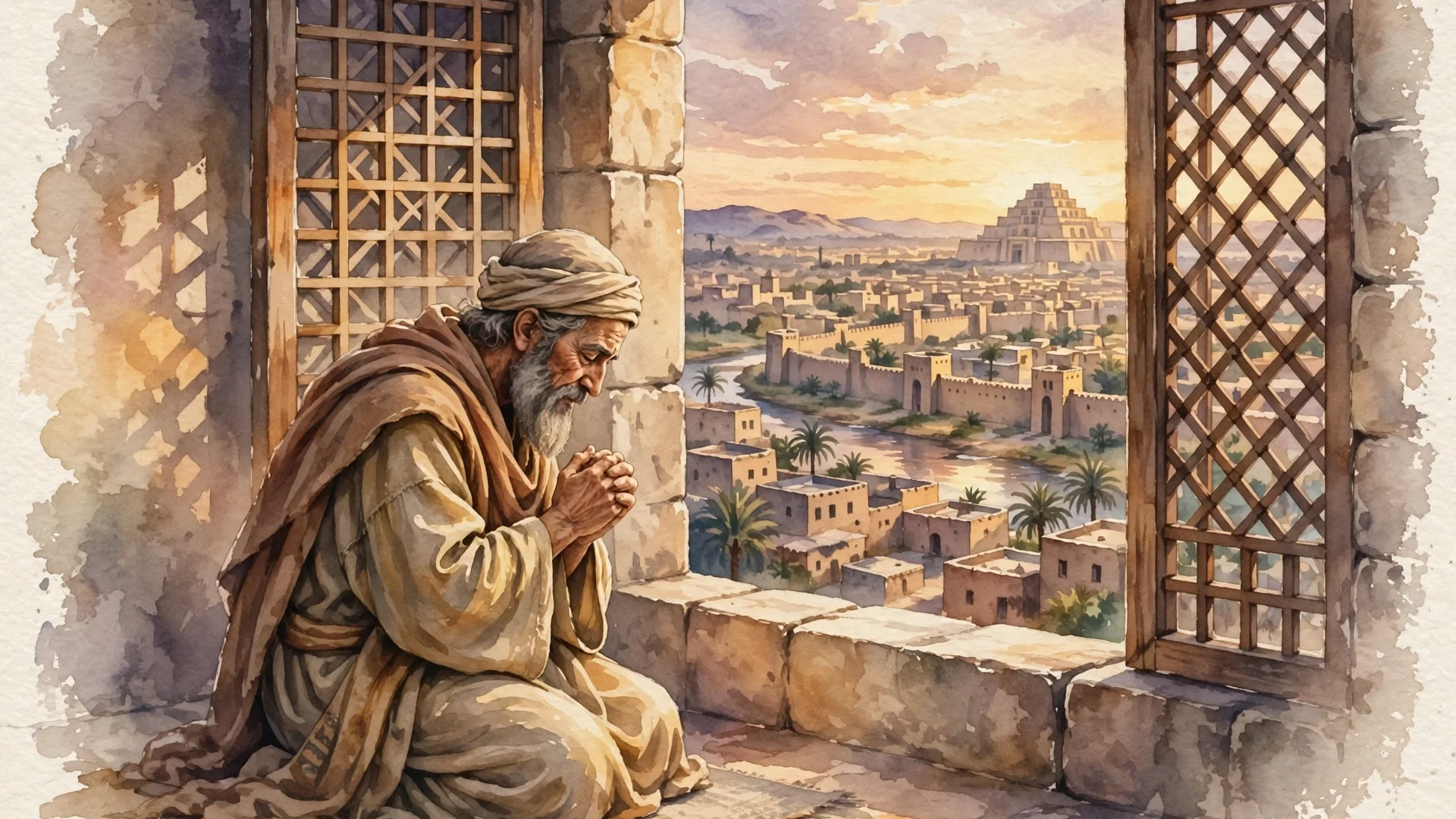
While Daniel was still praying, Gabriel came with the answer.
The Six Purposes of the Seventy Weeks (Daniel 9:24)
Gabriel begins with why — six divine purposes these 490 years will accomplish:
“Seventy weeks are determined upon thy people and upon thy holy city, to finish the transgression, and to make an end of sins, and to make reconciliation for iniquity, and to bring in everlasting righteousness, and to seal up the vision and prophecy, and to anoint the most Holy.” — Daniel 9:24
- To finish the transgression — Israel’s long rebellion will reach its end.
- To make an end of sins — sin’s power will be decisively dealt with.
- To make reconciliation for iniquity — atonement will be made (fulfilled at the cross).
- To bring in everlasting righteousness — God’s righteous kingdom will come.
- To seal up the vision and prophecy — all prophecy will be fulfilled.
- To anoint the most Holy — the holy place (or Holy One) will be consecrated.
The first three deal with the problem of sin; the last three reveal the solution — a righteous kingdom under the Messiah. Notice the scope: “thy people and thy holy city” — this prophecy centers on Israel and Jerusalem, though its blessings ripple to the whole world.
The Three Divisions: 7 + 62 + 1
| Division | Length | What Happens | Status |
|---|---|---|---|
| First: 7 weeks | 49 years | Jerusalem rebuilt “in troublous times” | Fulfilled |
| Second: 62 weeks | 434 years | From rebuilt city until Messiah the Prince | Fulfilled at Christ’s first coming |
| Gap | — | Messiah “cut off”; city destroyed (AD 70) | Fulfilled; we live in this gap |
| Third: 1 week | 7 years | Final week of end-times events | Still future |
The 69 Weeks: From Decree to Messiah
“Know therefore and understand, that from the going forth of the commandment to restore and to build Jerusalem unto the Messiah the Prince shall be seven weeks, and threescore and two weeks: the street shall be built again, and the wall, even in troublous times.” — Daniel 9:25
The clock starts with a decree to rebuild Jerusalem. Most scholars identify this as the decree of Artaxerxes to Nehemiah (Nehemiah 2). From that decree, 7 weeks (49 years) cover Jerusalem’s rebuilding under Ezra and Nehemiah — done, as promised, “in troublous times,” with enemies opposing every stone.
Then 62 more weeks (434 years) bring the total to 69 weeks — 483 years — reaching “unto the Messiah the Prince.” Remarkably, this timeline lands at the time of Jesus’ first coming. Then comes the heartbreaking line:
“And after threescore and two weeks shall Messiah be cut off, but not for himself.” — Daniel 9:26
“Cut off” — executed — “but not for himself”: not for His own sins, but for ours. Written 500 years beforehand, this is one of the clearest Old Testament predictions of Christ’s crucifixion. The verse goes on to predict that “the people of the prince that shall come shall destroy the city and the sanctuary” — fulfilled when Rome destroyed Jerusalem in AD 70.
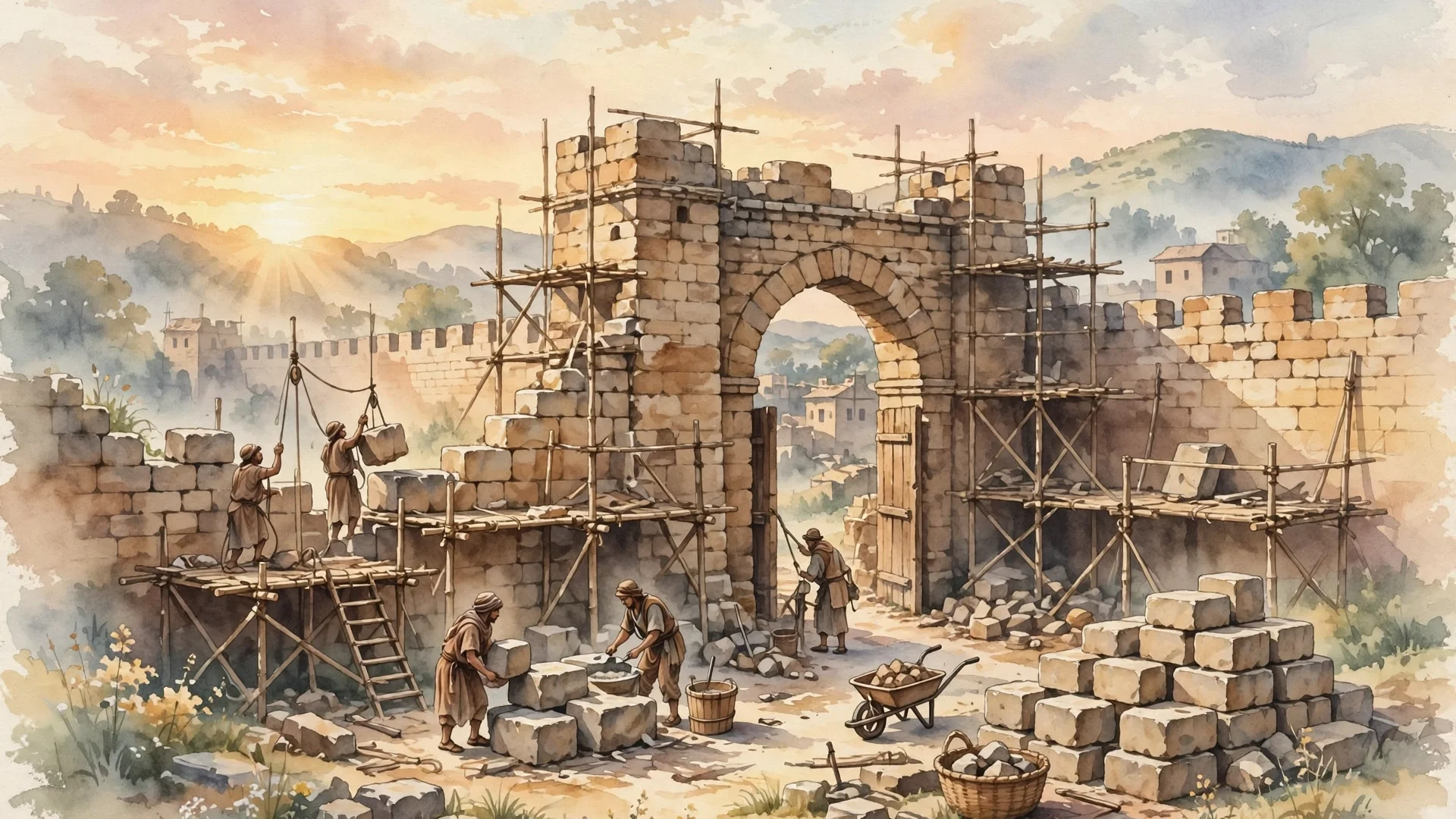
The street and wall rebuilt in troublous times — just as promised.
The 70th Week: Still Future
One week — seven years — remains unfulfilled:
“And he shall confirm the covenant with many for one week: and in the midst of the week he shall cause the sacrifice and the oblation to cease, and for the overspreading of abominations he shall make it desolate.” — Daniel 9:27
Most evangelical scholars understand this final week as the future seven-year tribulation period. A coming ruler (“the prince that shall come”) will make a covenant, break it at the midpoint (3½ years), stop temple sacrifices, and set up an “abomination” — language Jesus Himself echoed when describing the end times (Matthew 24:15).
Between the 69th and 70th weeks stands a gap — the period we are living in now, the age of grace, nearly 2,000 years and counting. God’s prophetic clock paused for the church age; it will resume with the final week. This is why Daniel’s seventy weeks are called the backbone of end-times theology: they give the skeleton on which Revelation, Matthew 24, and other prophecies hang.
Why It Matters for You Today
- It proves the Bible is true. A prophecy pinpointing the Messiah’s arrival centuries in advance is evidence you can trust God’s Word completely.
- It shows God keeps His schedule. The 69 weeks unfolded exactly as promised. The final week will too — God’s timing is perfect, even when it feels slow.
- It calls you to readiness. The gap we live in will end. Jesus urged watchfulness (Matthew 24:42) — live ready, share the gospel, and keep your lamp full.
- It centers hope on Jerusalem’s King. The whole timeline moves toward the Messiah — first in suffering, finally in glory. Your hope has a name: Jesus.

God’s plan for Jerusalem — and the world — is right on schedule.
Frequently Asked Questions
How long is a “week” in Daniel’s seventy weeks?
Each “week” is a seven of years — so 70 weeks equals 490 years. This follows the biblical pattern of weeks of years (Genesis 29:27; Leviticus 25:8).
Have all seventy weeks been fulfilled?
Sixty-nine weeks were fulfilled through Christ’s first coming and Jerusalem’s destruction in AD 70. The 70th week — a final seven years — is still future in most evangelical interpretations.
What is the gap between the 69th and 70th week?
The gap is the present church age — the period between Christ’s first and second comings. God’s prophetic clock for Israel paused while the gospel goes to all nations.
Does Daniel 9 predict the exact year of Christ’s coming?
Many scholars find the 483 years (69 weeks) from Artaxerxes’ decree land remarkably close to Jesus’ ministry and crucifixion. Calculations vary by calendar details, but the precision is striking.
Why is it called the backbone of end-times theology?
Because it provides the chronological framework — especially the future seven-year 70th week — on which the tribulation prophecies of Revelation, Matthew 24, and 2 Thessalonians 2 are built.
See Also
- Four Types of End Times Books and the Order in Which to Read Them
- Is the Rapture Coming This Saturday?
- A Brief History of End Times Views: How Our Times Shape Our Eschatology
Conclusion
Daniel’s seventy weeks remind us that history is not random — it is God’s story, unfolding on His schedule. Sixty-nine weeks came to pass exactly as Gabriel promised, including the cutting off of the Messiah for our sins. The final week will come just as surely.
So live with confidence and urgency. The God who predicted the Messiah’s arrival 500 years in advance can be trusted with your future too. Read Daniel 9 in full, marvel at the precision of prophecy, and live ready — for the King who came once is coming again.
