



The Parable of the Prodigal Son is one of the most beloved stories Jesus ever told. Found in Luke 15:11-32, it speaks to anyone who has ever felt lost, ashamed, or unsure whether they could ever be welcomed back. Even people who have never opened a Bible recognize the phrase “prodigal son” as shorthand for a wayward child who returns home.
This guide breaks down the parable’s summary, historical background, characters, and meaning — along with practical lessons you can apply to your own life, faith, or teaching.
What Is the Parable of the Prodigal Son?
The parable appears in the Gospel of Luke as the third in a set of three “lost” stories — the lost sheep, the lost coin, and the lost son. Jesus told these parables in response to religious leaders who criticized Him for spending time with tax collectors and people considered sinners.
At its core, the story is about a father with two sons. The younger son demands his inheritance early, leaves home, and squanders it on reckless living. When he hits rock bottom, he decides to return home, expecting rejection. Instead, his father runs to meet him with open arms.
Summary of Luke 15:11-32
Here is a simplified breakdown of the story’s flow:
- The request – The younger son asks for his share of the estate while his father is still alive, an unusual and disrespectful request in that culture.
- The departure – He travels to a distant country and spends everything on wild living.
- The famine – A severe famine hits the region, and the son is left destitute, working a job feeding pigs — one of the lowest positions imaginable for a Jewish man of that time.
- The realization – Starving and desperate, he “comes to himself” and decides to return home, planning to ask his father to treat him as a hired servant.
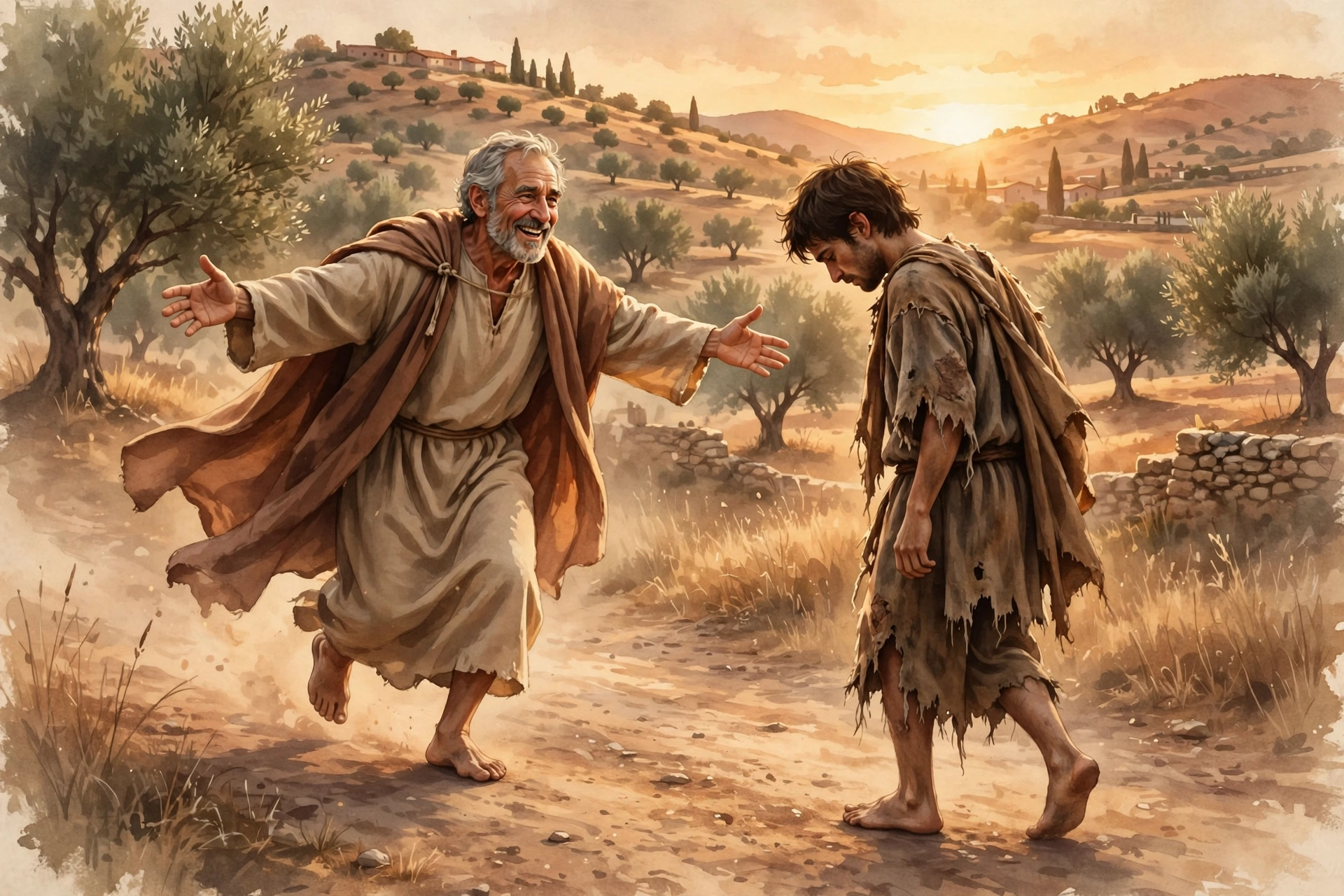
- The return – Before the son can even finish his rehearsed apology, his father sees him from a distance, runs to him, embraces him, and orders a celebration.
- The elder brother’s response – The older son, who stayed and worked faithfully, becomes angry and refuses to join the celebration, feeling overlooked despite his years of loyalty.
Historical and Cultural Context
Understanding the first-century setting makes the story hit even harder:
- Asking for an inheritance before a parent’s death was considered a serious insult, essentially treating the father as if he were already dead.
- Jewish audiences would have been shocked that the father didn’t disown his son on the spot.
- Feeding pigs was ritually unclean work for a Jewish person, signaling just how far the younger son had fallen.
- A father running in public was culturally undignified for an older man of status — yet the father does it anyway, showing the depth of his love and eagerness to forgive.
These details aren’t just background trivia; they’re what make the father’s reaction so radical to the original audience.
Character Breakdown
| Character | Role in the Story | What They Represent |
|---|---|---|
| The Father | Welcomes both sons unconditionally | God’s grace, patience, and unconditional love |
| The Younger Son | Leaves home, wastes his inheritance, returns humbled | Repentance and those who feel far from God |
| The Elder Son | Stays home, works hard, resents the celebration | Self-righteousness, jealousy, and legalism |
The Meaning and Theological Message
God’s Unconditional Love and Forgiveness
The father’s reaction is the emotional center of the parable. He doesn’t wait for an apology, doesn’t demand explanations, and doesn’t impose a probation period. He simply runs, embraces, and celebrates. This reflects a core biblical theme: God’s love isn’t earned through good behavior — it’s freely given and always available to those who turn back.
Repentance and Grace
The younger son’s turning point — often called “coming to his senses” — is a picture of genuine repentance. He doesn’t just want relief from hunger; he acknowledges his wrongdoing and returns with humility, expecting nothing more than servant status. Grace, in this story, exceeds anything he asked for.
The Elder Brother’s Struggle with Jealousy
The parable doesn’t end with the younger son’s return — it ends on a cliffhanger involving the older brother. His anger highlights a different kind of distance from the father: one rooted in duty without joy, obedience without love. Many readers find his character just as relatable as the prodigal’s, since resentment toward others’ second chances is a common human struggle.
Key Lessons from the Parable
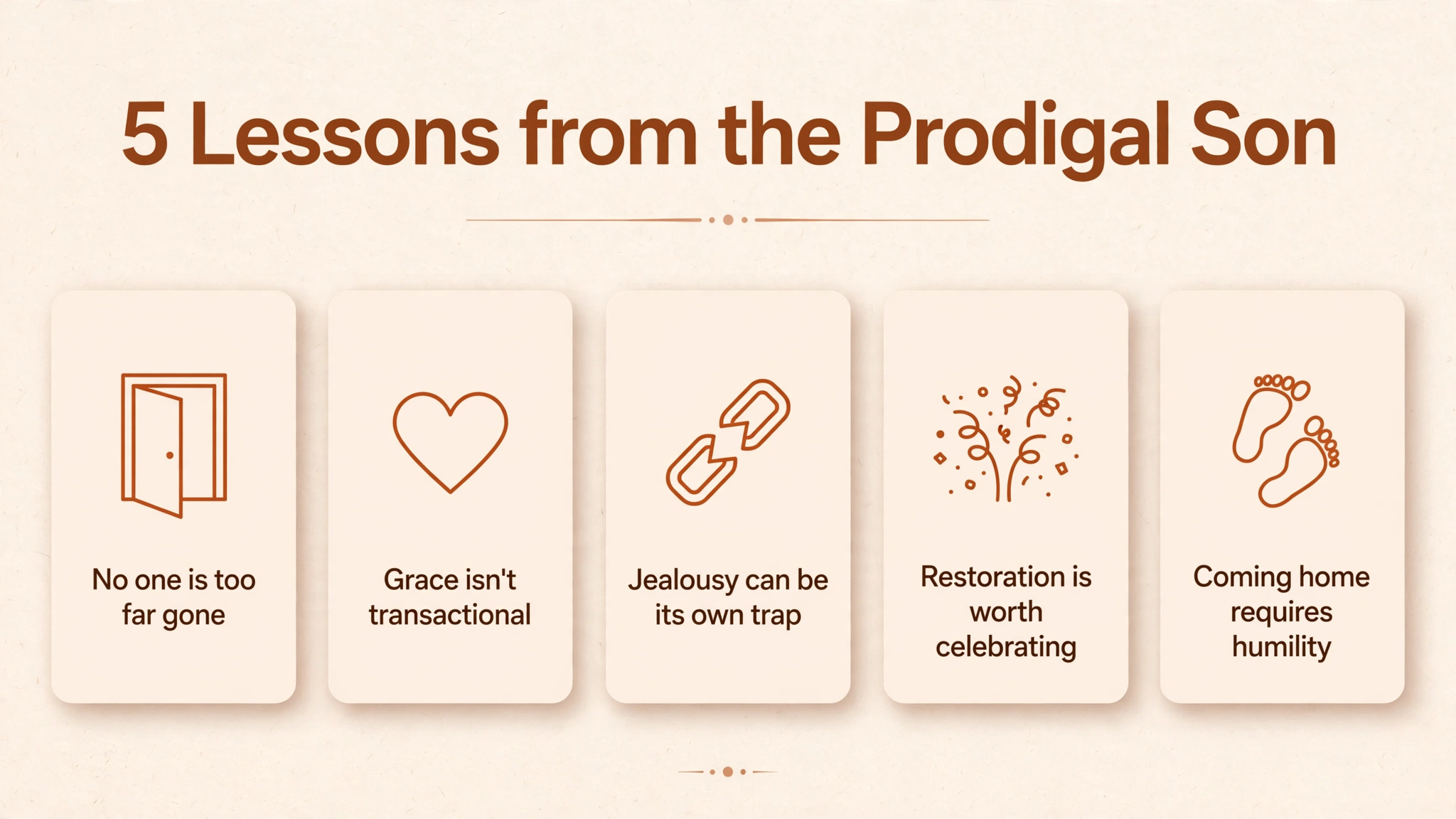
- No one is too far gone. The story shows that returning is always possible, no matter how badly someone has messed up.
- Grace isn’t transactional. The father doesn’t require repayment or a period of proving himself.
- Jealousy can be its own trap. The elder son’s bitterness kept him from joining the celebration, even though everything the father had was already his.
- Restoration is worth celebrating. The father’s response models joy over judgment.
- Coming home requires humility. The younger son’s honest self-assessment was the first step toward reconciliation.
Why This Parable Still Matters Today
Whether or not someone identifies as religious, the story resonates because it touches universal experiences: regret, estrangement, jealousy, and the hope of being welcomed back despite past mistakes. It’s frequently referenced in sermons, counseling, recovery programs, and family reconciliation conversations because its emotional truth transcends its original setting.
How to Teach or Study This Parable
If you’re preparing a lesson, sermon, or personal study, consider this approach:
- Read the full passage slowly, ideally in more than one translation.
- Discuss the cultural context so the father’s actions land with their full weight.
- Invite reflection on which character — the younger son, the elder son, or the father — the reader identifies with most right now.
- Connect the story to the broader chapter (Luke 15), which also includes the lost sheep and lost coin.
- Close with a discussion of what genuine repentance and grace look like in everyday relationships.
FAQs
What is the main message of the Parable of the Prodigal Son?
The main message is that God offers unconditional love and forgiveness to anyone who turns back, no matter how far they’ve strayed.
Who are the main characters in the parable?
The three main characters are the father, the younger (prodigal) son, and the elder son.
Why is it called the “prodigal” son?
“Prodigal” means recklessly wasteful, referring to how the younger son squandered his inheritance on extravagant living.
What does the elder brother represent?
The elder brother represents self-righteousness and jealousy — someone who follows the rules but struggles with resentment toward grace shown to others.
Where is the Parable of the Prodigal Son found in the Bible?
It’s found in the Gospel of Luke, chapter 15, verses 11 through 32.
Is the Prodigal Son parable only about repentance?
No. While repentance is central, the story also addresses forgiveness, jealousy, family relationships, and the nature of grace.
Conclusion
The Parable of the Prodigal Son remains powerful because it captures something every person can relate to: the fear of not being welcomed back, and the hope that we might be anyway. Whether you’re studying it for personal growth, preparing to teach it, or simply revisiting a familiar story with fresh eyes, its central message endures — grace runs toward us before we even finish explaining ourselves.
