


The story of Peter walking on water is one of the most dramatic moments in the Gospels — and one of the most personal. At 3 a.m., in the middle of a storm, Peter does the impossible: he walks on the Sea of Galilee. Then he does the painfully relatable: he looks at the wind, gets afraid, and starts to sink. In eleven verses, Matthew gives us the whole Christian life — bold faith, sudden fear, a desperate cry, and a Savior who catches us immediately.
This isn’t just Peter’s story. It’s yours every time you step out in faith, get distracted by the storm, and cry, “Lord, save me!” Below is the full account, key verses, seven lessons, and answers to common questions.
Table of Contents
- What Is the Story of Peter Walking on Water?
- Key Bible Verses From Matthew 14
- The Story, Moment by Moment
- 7 Lessons From Peter Walking on Water
- Frequently Asked Questions
- Conclusion
What Is the Story of Peter Walking on Water?
What is the story of Peter walking on water? Found in Matthew 14:22-33, it tells how Jesus walked on the Sea of Galilee toward His disciples’ storm-tossed boat, how Peter asked to join Him and briefly walked on water himself, how he began to sink when he feared the wind, and how Jesus immediately caught him — leading the disciples to worship Jesus as the Son of God. For more background, see this overview of Peter walking on water.
Key Bible Verses From Matthew 14
Matthew 14:25
“And in the fourth watch of the night Jesus went unto them, walking on the sea.”
The fourth watch was 3–6 a.m. — the darkest hours. Jesus came to them in the middle of the night, in the middle of the storm. He still does.
Matthew 14:27
“But straightway Jesus spake unto them, saying, Be of good cheer; it is I; be not afraid.”
Before anything else, Jesus speaks peace: “It is I; be not afraid.” His presence turns terror into courage. The storm didn’t stop — but fear lost its grip.
Matthew 14:28-29
“And Peter answered him and said, Lord, if it be thou, bid me come unto thee on the water. And he said, Come. And when Peter was come down out of the ship, he walked on the water, to go to Jesus.”
Peter asked before he acted — faith responds to Christ’s invitation, not impulse. And then he actually did it: Peter walked on water. Never let his sinking make you forget his walking.
Matthew 14:30
“But when he saw the wind boisterous, he was afraid; and beginning to sink, he cried, saying, Lord, save me.”
The turning point: Peter shifted his eyes from Jesus to the wind. Fear followed focus — what you stare at shapes you. But even sinking, Peter prayed the perfect three-word prayer: “Lord, save me.”
Matthew 14:31
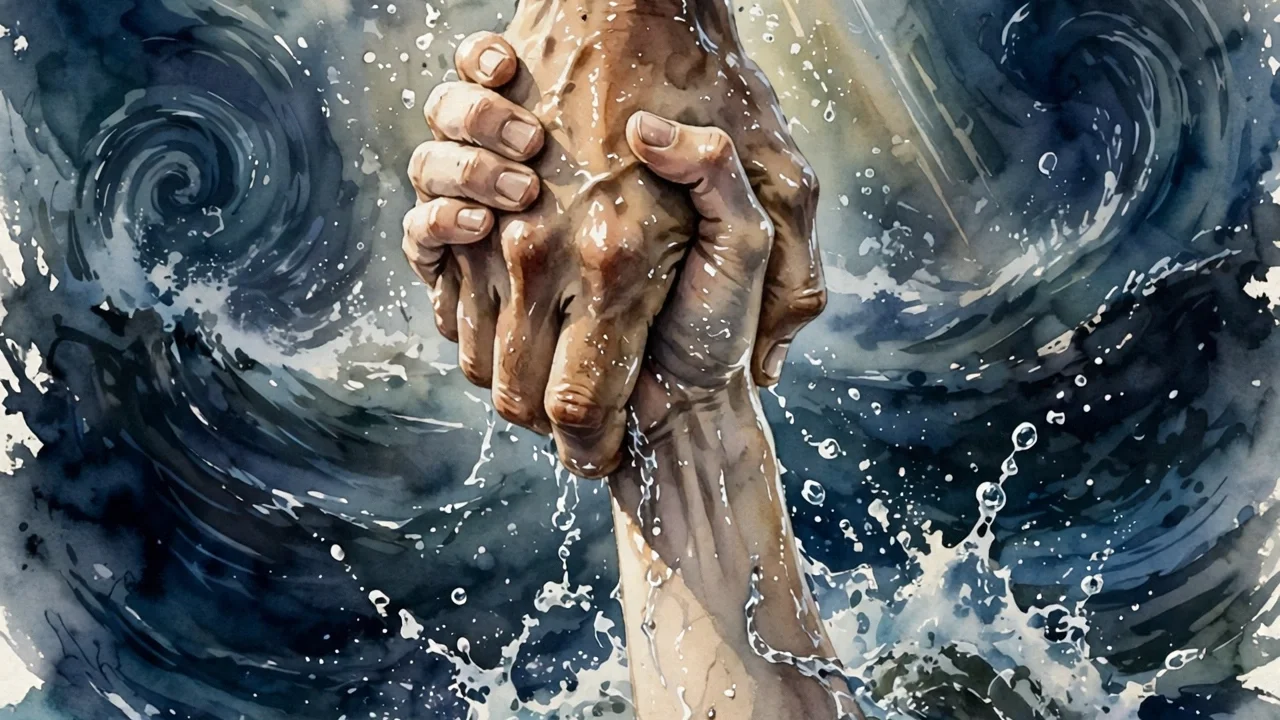
“And immediately Jesus stretched forth his hand, and caught him, and said unto him, O thou of little faith, wherefore didst thou doubt?”
“Immediately” — Jesus didn’t lecture first or let Peter flounder. He caught him, then corrected him gently. Rescue comes before rebuke in Jesus’ heart.
Matthew 14:32-33
“And when they were come into the ship, the wind ceased. Then they that were in the ship came and worshipped him, saying, Of a truth thou art the Son of God.”
The storm ended the moment Jesus stepped in — and worship erupted. Every rescue is meant to end in worship: “Of a truth thou art the Son of God.”

The Story, Moment by Moment
| Moment | What Happened | Verse |
|---|---|---|
| Sent into the storm | Jesus sends the disciples ahead by boat while He prays alone | Matthew 14:22-23 |
| The struggle | Wind and waves batter the boat through the night | Matthew 14:24 |
| The appearance | Jesus walks on the sea toward them; they cry out in fear | Matthew 14:25-26 |
| The reassurance | “Be of good cheer; it is I; be not afraid” | Matthew 14:27 |
| The request | Peter asks to come to Jesus on the water | Matthew 14:28 |
| The walk | Peter steps out and walks on water toward Jesus | Matthew 14:29 |
| The sinking | Seeing the wind, Peter is afraid and begins to sink | Matthew 14:30 |
| The rescue | “Lord, save me!” — immediately Jesus catches him | Matthew 14:30-31 |
| The calm | They climb into the boat; the wind ceases | Matthew 14:32 |
| The worship | The disciples worship: “Of a truth thou art the Son of God” | Matthew 14:33 |
7 Lessons From Peter Walking on Water
1. Storms come even in God’s will
The disciples were exactly where Jesus told them to be — and still hit a storm. Obedience doesn’t exempt you from trouble; it guarantees Christ will meet you in it.
2. Jesus prays before He rescues
While the disciples strained at the oars, Jesus was on the mountain praying. Your storm is never out of His sight — He’s interceding before He’s intervening.
3. Faith leaves the boat
Eleven disciples stayed dry and safe — and missed the miracle. Peter got wet, sank, and was rescued — and walked on water. Safe faith stays in the boat; real faith steps out.
4. Keep your eyes on Jesus, not the wind
Peter walked while looking at Christ and sank while looking at the storm. What you focus on feeds you: focus on Jesus feeds faith; focus on problems feeds fear.
5. A short prayer is enough
“Lord, save me” — three words, instantly answered. You don’t need eloquence in a crisis; you need direction. Cry out, and He comes immediately.
6. Jesus rescues before He rebukes
He caught Peter first, then asked, “wherefore didst thou doubt?” When you fail, expect His hand before His correction. His grace grabs you; His truth grows you.
7. Every storm should end in worship
The disciples’ terror became worship: “Of a truth thou art the Son of God.” Let your storms do the same — turn every rescue into praise.
Frequently Asked Questions
Did Peter really walk on water?
Yes. Matthew 14:29 states plainly: “he walked on the water, to go to Jesus.” It was a genuine miracle — Peter briefly did the impossible through faith in Christ’s word.
Why did Peter start sinking?
He shifted his focus from Jesus to the wind and became afraid (Matthew 14:30). Fear followed his changed focus — a pattern that still sinks faith today.
Was Jesus disappointed in Peter?
Jesus gently corrected him — “O thou of little faith, wherefore didst thou doubt?” — but only after immediately rescuing him. The tone is a teacher’s, not a judge’s.
What does “the fourth watch” mean?
The Romans divided the night into four watches; the fourth was roughly 3–6 a.m. Jesus came in the darkest, latest hours — often when He comes to us, too.
What is the main lesson of Peter walking on water?
Keep your eyes on Jesus. Faith looks to Christ and walks on water; fear looks at the storm and sinks. And when you sink, cry out — He immediately saves.
See Also
- 20 Bible Verses About God As your Helper
- Preparing to Be a Help Meet Genesis 218
- Jesus is My Help in Times of Trouble
Conclusion
Don’t remember Peter only as the man who sank — remember him as the only disciple who walked on water. His story is your story: the bold step, the distracted glance, the desperate cry, and the immediate rescue. Every part of it points to Jesus.
So step out of your boat. Keep your eyes on Christ, not the wind. And when — not if — you start to sink, pray the three words that never fail: “Lord, save me.” He will stretch out His hand immediately, calm your storm, and turn your fear into worship. Of a truth, He is the Son of God.