



Psalm 23 Explained
Psalm 23 explained line by line is one of the most comforting journeys you can take through Scripture. Six short verses. One hundred and eighteen words in the King James Version. And yet no passage in all the Bible has brought more peace to more hospital rooms, funeral homes, and fearful hearts.
David — the shepherd who became king — wrote it from experience. He knew what sheep need, and he knew what his Shepherd had given him: provision, rest, guidance, protection, honor, and a home that never ends. Unlike a topical list of shepherd verses, this is Psalm 23 itself, verse by verse, phrase by phrase.
Below you’ll find the full text (KJV), a verse-by-verse explanation, the two great pictures David paints, five ways it changes your life, and answers to common questions.
Table of Contents
What Does Psalm 23 Mean?
What does Psalm 23 mean? Psalm 23 is David’s declaration of trust in God, written in two pictures: verses 1-4 show God as a Shepherd who provides, guides, and protects His sheep through life’s darkest valley; verses 5-6 shift to God as a Host who honors His guest with a feast, anointing oil, and an overflowing cup, ending with the promise of dwelling in God’s house forever. The psalm moves from “He” (verses 1-3) to “Thou” (verses 4-6) — from describing God to speaking with Him.
The whole psalm answers one question: what is it like to belong to God? David’s answer: you shall not want, you will be led, you will be restored, you will fear no evil, you will be honored, and you will dwell with Him forever. For a deeper study, see what it means that the Lord is my Shepherd.
Psalm 23 (King James Version)
A Psalm of David.
1 The LORD is my shepherd; I shall not want.
2 He maketh me to lie down in green pastures: he leadeth me beside the still waters.
3 He restoreth my soul: he leadeth me in the paths of righteousness for his name’s sake.
4 Yea, though I walk through the valley of the shadow of death, I will fear no evil: for thou art with me; thy rod and thy staff they comfort me.
5 Thou preparest a table before me in the presence of mine enemies: thou anointest my head with oil; my cup runneth over.
6 Surely goodness and mercy shall follow me all the days of my life: and I will dwell in the house of the LORD for ever.
Verse by Verse Explanation
Verse 1: “The LORD is my shepherd; I shall not want.”
David opens with the most personal theology in Scripture. Not “the LORD is a shepherd” or “the LORD is our shepherd” — but “my shepherd.” The eternal, covenant God (LORD, Yahweh) has taken personal responsibility for David the way a shepherd takes responsibility for a sheep: feeding, guiding, protecting, seeking. David, himself a former shepherd (1 Samuel 17:34-36), knew exactly what the metaphor cost — a shepherd’s life is poured out for the flock.
“I shall not want” uses “want” in the old sense of lack. The logic is airtight: if the LORD Himself is your shepherd, what could you possibly lack? This isn’t a promise of luxury — it’s a promise of sufficiency. Every genuine need, supplied. The takeaway: contentment isn’t having everything — it’s having a Shepherd who is everything.
Verse 2: “He maketh me to lie down in green pastures: he leadeth me beside the still waters.”
Sheep won’t lie down unless four conditions are met: they’re free from fear, free from friction with other sheep, free from pests, and full. That David’s Shepherd maketh him lie down means God actively creates the conditions for rest — we don’t manufacture it ourselves. “Green pastures” picture rich nourishment (God’s Word, His provision); “still waters” picture peace — sheep fear rushing water and will dehydrate rather than drink from it, so the shepherd leads them gently to calm pools. The takeaway: rest is a gift your Shepherd gives, not a prize you earn. Let Him lead you to it.
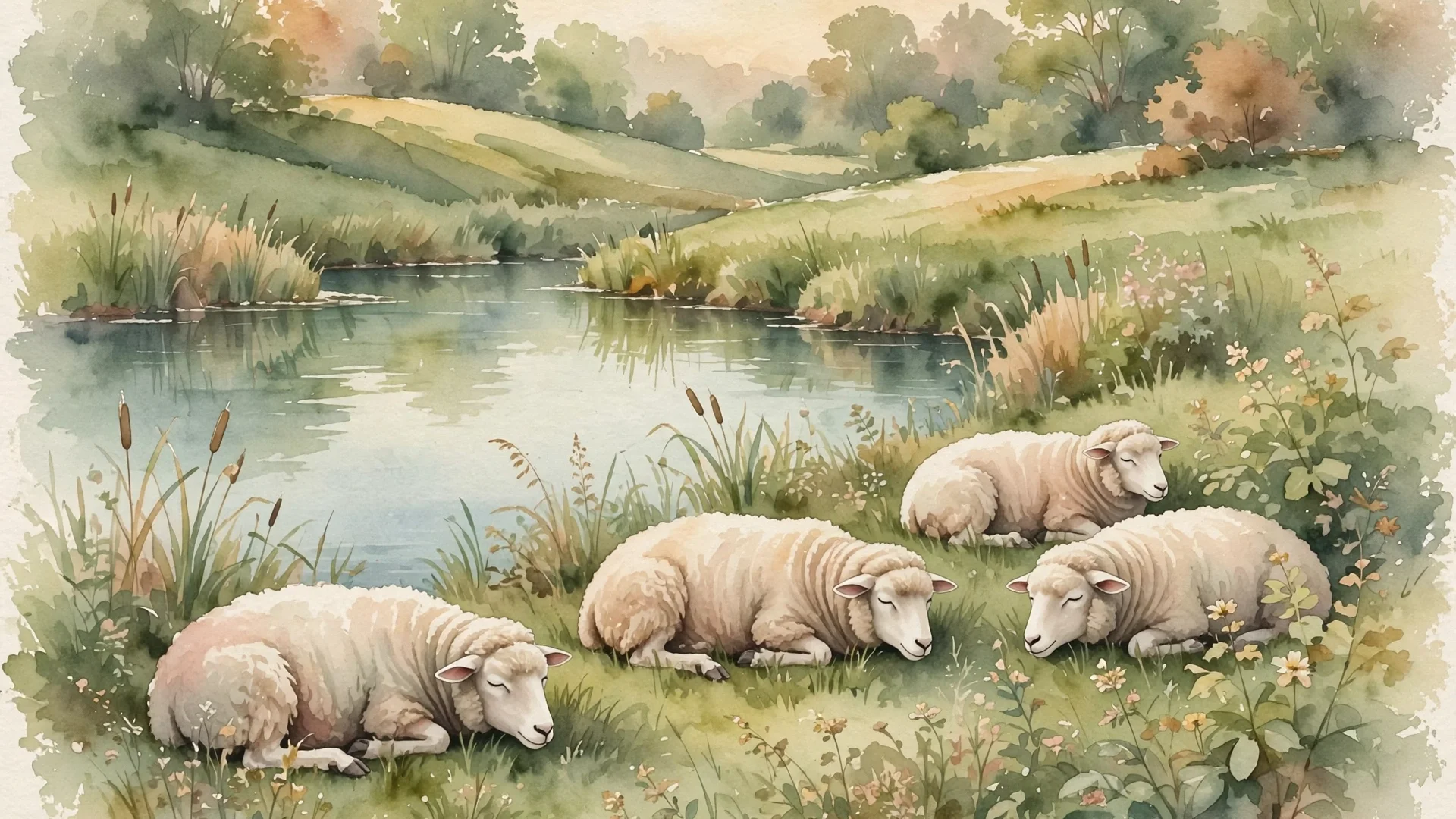
He maketh me to lie down in green pastures.
Verse 3: “He restoreth my soul: he leadeth me in the paths of righteousness for his name’s sake.”
Even the Shepherd’s sheep get depleted, discouraged, and wander off. “Restoreth” means to bring back — God revives the weary and retrieves the wandering. Then He leads “in the paths of righteousness” — not just right paths (the easy route) but righteous paths (the holy route). And why? “For his name’s sake” — God’s reputation is on the line. He guides you well because His name is attached to your life. The takeaway: when you’re empty, He restores; when you’re lost, He retrieves — because His name is at stake in your story.
Verse 4: “Yea, though I walk through the valley of the shadow of death, I will fear no evil: for thou art with me; thy rod and thy staff they comfort me.”
Notice the shift: “He” becomes “Thou.” In the valley, description turns to conversation. David doesn’t say if I walk through the valley but though — valleys are certain; so is the Shepherd’s presence. And note: we walk through — the valley is a passage, not a residence.
“The valley of the shadow of death” pictures a dark ravine where predators lurk — and a shadow can’t hurt you. A shadow of a dog can’t bite; a shadow of death can’t kill. Why no fear? “For thou art with me.” Presence, not absence of danger, is the antidote to fear. The rod (a heavy club) beats off predators — God’s protection. The staff (the shepherd’s crook) guides and rescues wandering sheep — God’s guidance. Both comfort: God’s comfort isn’t only softness — it’s protection and correction. The takeaway: in your darkest valley, you’re never alone, never unprotected, never unguided.
Verse 5: “Thou preparest a table before me in the presence of mine enemies: thou anointest my head with oil; my cup runneth over.”
The picture shifts from Shepherd to Host. In the ancient world, a host anointing a guest’s head with oil was a mark of honor and refreshment. God doesn’t wait until your enemies are gone to bless you — He prepares a feast in their presence, while they’re watching. Your cup doesn’t just fill; it runneth over — abundance beyond need. The takeaway: God doesn’t only sustain you in trouble — He honors you in front of it.

Thy rod and thy staff, they comfort me.
Verse 6: “Surely goodness and mercy shall follow me all the days of my life: and I will dwell in the house of the LORD for ever.”
David ends with certainty: “Surely” — not maybe, not hopefully. “Goodness and mercy shall follow me” — the Hebrew word for “follow” (radaph) means to pursue, even hunt down. God’s goodness and mercy don’t trail behind passively; they chase you down every day of your life. And the destination? “The house of the LORD for ever” — the psalm that began with a Shepherd ends at home. From green pastures to God’s house: the whole journey, covered. The takeaway: your future is pursuit by grace and arrival at home.
The Two Pictures in Psalm 23
| The Shepherd (vv. 1-4) | The Host (vv. 5-6) | |
|---|---|---|
| God’s role | Shepherd caring for sheep | Host honoring a guest |
| What He gives | Provision, rest, guidance, protection | Feast, anointing, overflowing cup |
| Key phrase | “I shall not want” | “My cup runneth over” |
| Setting | Pastures, waters, valley | Table, house of the LORD |
| Language | “He” — describing God | “Thou” — speaking to God |
5 Ways Psalm 23 Changes Your Life
- It cures the fear of lack. “I shall not want” is a daily declaration. When anxiety whispers about money, health, or the future, answer with verse 1: my Shepherd owns everything I need.
- It gives you permission to rest. You don’t have to earn rest — your Shepherd makes you lie down. Burnout isn’t holiness; receiving rest is obedience.
- It removes the fear of death and darkness. The valley is real, but it’s a shadow — and shadows can’t hurt you. “Thou art with me” is stronger than any valley you’ll ever walk.
- It teaches you to talk to God in trouble. Notice the shift from “He” to “Thou” in verse 4. In the valley, stop describing God to others and start speaking to Him yourself.
- It fixes your eyes on home. The psalm ends “for ever.” Whatever today holds, your story ends in the house of the LORD — pursued by goodness and mercy all the way there.
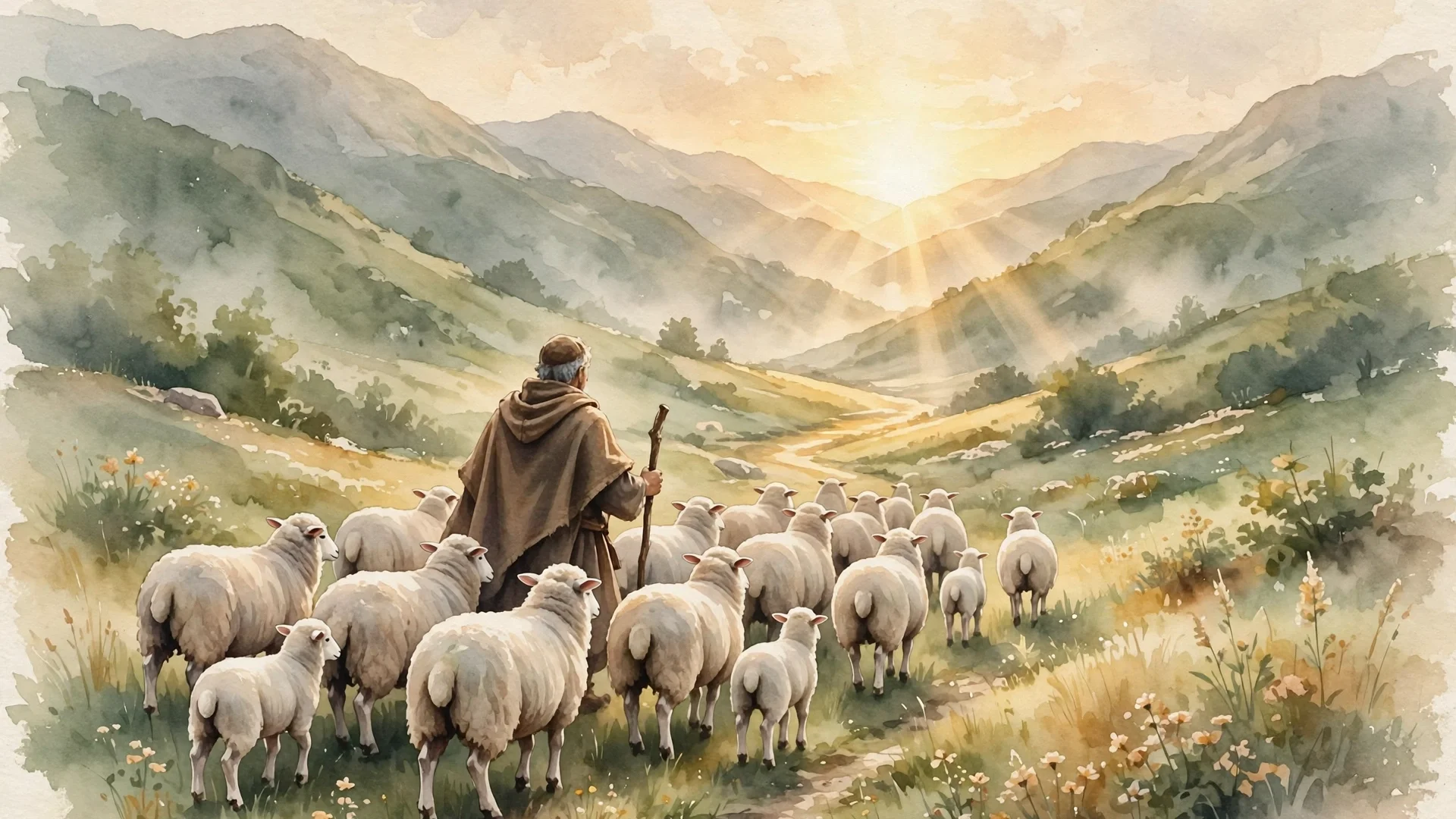
Surely goodness and mercy shall follow me — all the way home.
Frequently Asked Questions
What is the main message of Psalm 23?
That belonging to God means complete care: provision (“I shall not want”), rest (green pastures), guidance (paths of righteousness), protection (the valley), honor (the table), and eternal home (the house of the LORD forever). It’s a declaration of trust from someone who knew both sheep and the Shepherd.
Why does Psalm 23 change from “he” to “you”?
Verses 1-3 describe God in the third person (“He maketh me…”). At verse 4 — entering the valley — David switches to direct address: “for thou art with me.” In the darkest place, theology becomes conversation. The valley turns description into intimacy.
What is the difference between the rod and the staff?
The rod was a short, heavy club used to fight off predators — picturing God’s protection against external threats. The staff was the long shepherd’s crook used to guide sheep and lift them from danger — picturing God’s guidance and rescue. Both “comfort” the sheep: God’s comfort includes both defense and direction.
What does “my cup runneth over” mean?
It pictures a host so generous that the guest’s cup can’t contain the blessing — abundance beyond need. God doesn’t give sparingly to His people; He gives until it overflows. It’s the Old Testament picture of the abundant life Jesus promised (John 10:10).
How is Psalm 23 different from other “shepherd” passages?
Other passages teach about the Shepherd (like Jesus the Good Shepherd in John 10); Psalm 23 is a first-person testimony of life under His care. It’s not doctrine about shepherding — it’s David’s personal diary of being shepherded, verse by verse, from pasture to valley to home.
See Also
Conclusion
Six verses. Two pictures. One Shepherd. And a promise that stretches from “I shall not want” to “for ever.”
Psalm 23 isn’t just for funerals — though it has comforted millions there. It’s for Monday mornings and midnight worries, for green pastures and dark valleys, for tables of blessing and the long road home.
Read it slowly. Pray it personally. And when the valley comes — as it will — remember the three words that change everything: Thou art with me.
