



Rock Symbolism in the Bible
Rock symbolism in the Bible is one of Scripture’s richest pictures of who God is and what Christ has done. From Moses striking the rock in the desert to Jesus called the cornerstone, from David’s “rock of my salvation” to the wise builder’s foundation, rocks carry meaning in nearly every part of God’s story.
Rocks speak of strength, permanence, and refuge. They do not move, erode quickly, or fail under pressure. That is exactly why God chose this image for Himself: He is unchanging, unshakable, and utterly dependable. When the Bible calls God a rock, it is telling you what kind of God He is.
Below we will explore what the rock symbolizes in the Bible through seven key uses, each grounded in Scripture. Whether you are studying, teaching, or simply curious, these passages will deepen your picture of the God who never shifts.
What Does the Rock Symbolize in the Bible?
What does the rock symbolize in the Bible? In the Bible, the rock symbolizes God’s strength, stability, permanence, and protection. God is called our rock, fortress, and refuge (2 Samuel 22:2-3); Christ is the spiritual rock who gives living water (1 Corinthians 10:4), the cornerstone of the church (Ephesians 2:20), and the foundation for a wise life (Matthew 7:24-25). Rocks also serve as memorials of God’s help and, for unbelievers, a stone of stumbling.
The image is consistent from Genesis to Revelation: what is built on rock endures, and the Rock Himself never changes. For a fuller topical index, browse a topical index of Bible verses about the rock.
7 Ways the Bible Uses Rock Symbolism
1. God Is Our Rock and Fortress
“And he said, The LORD is my rock, and my fortress, and my deliverer; The God of my rock; in him will I trust.” (2 Samuel 22:2-3)
David sang these words after God delivered him from his enemies. A rock fortress in ancient Israel was a high, inaccessible cliff where people fled for safety. Calling God “my rock” means He is your high place: unscalable by enemies, unshakable by storms. Moses adds the deeper note: “He is the Rock, his work is perfect” (Deuteronomy 32:4). God’s rock-like nature is not just about protection; it is about perfection and justice. He does not shift, improve, or decline. When everything in your life feels like sand, God is rock.
2. Christ the Spiritual Rock Who Gives Living Water
“And did all drink the same spiritual drink: for they drank of that spiritual Rock that followed them: and that Rock was Christ.” (1 Corinthians 10:4)
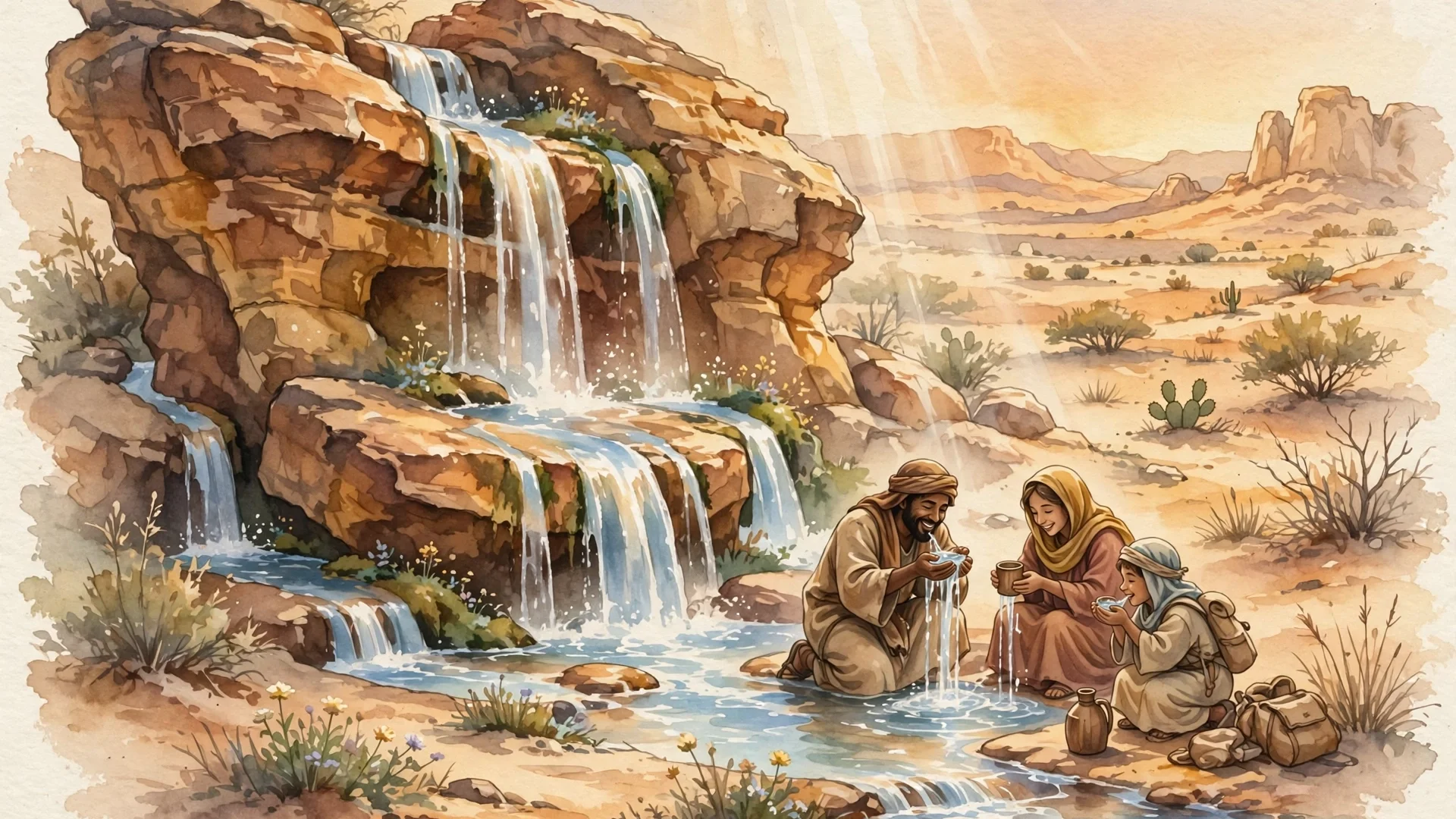
In the wilderness, Israel was dying of thirst until God told Moses, “Thou shalt smite the rock, and there shall come water out of it, that the people may drink” (Exodus 17:6). Paul reveals the stunning truth: that rock was Christ. The smitten rock pictures the crucified Savior, struck once so that living water could flow forever. You can read 1 Corinthians 10 in the King James Version to see how Paul connects Israel’s wilderness story to our spiritual life. Every time you drink deeply of Christ, you are drinking from the Rock.
3. Christ the Cornerstone
“And are built upon the foundation of the apostles and prophets, Jesus Christ himself being the chief corner stone.” (Ephesians 2:20)
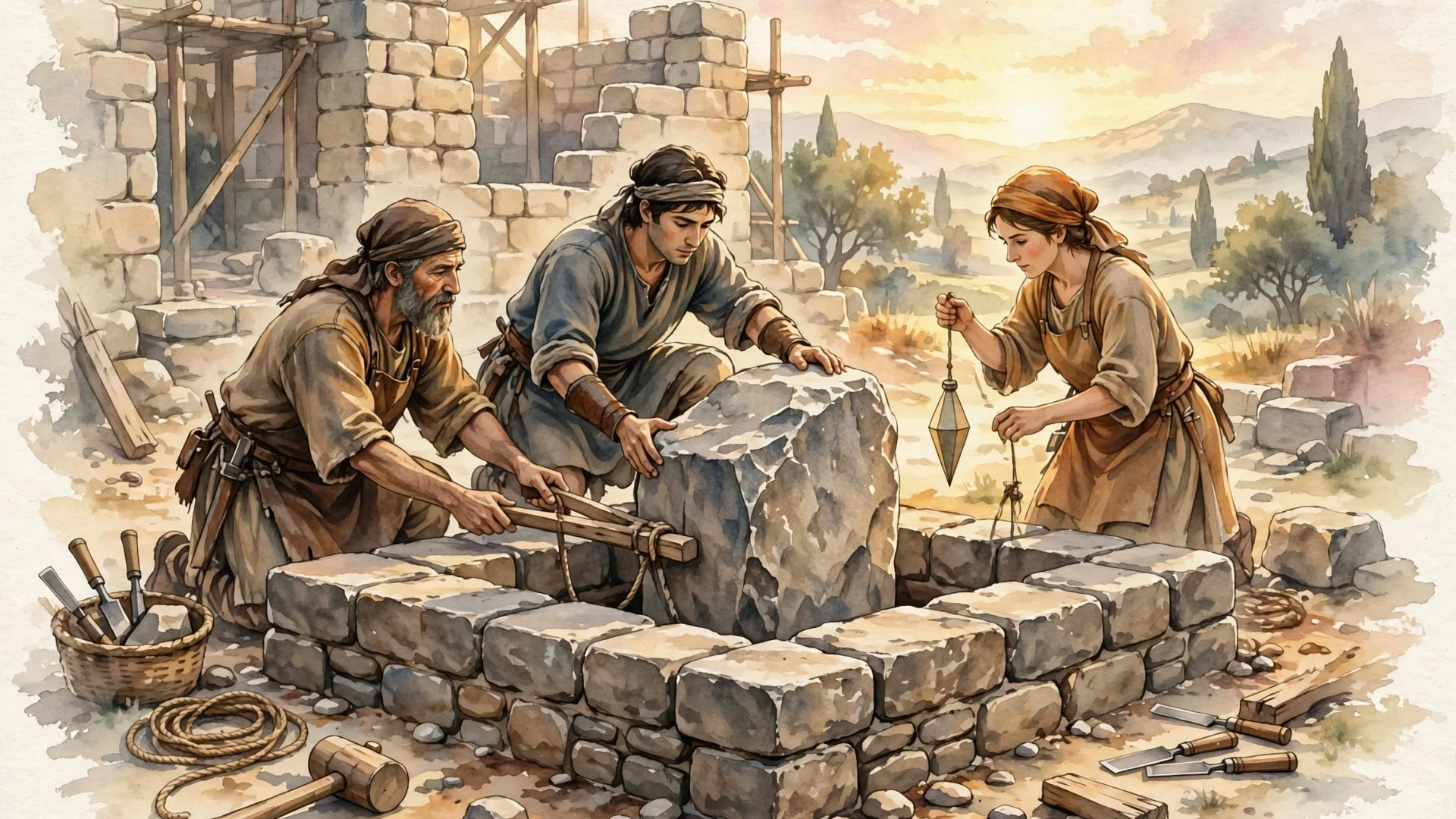
In ancient construction, the cornerstone was the first and most important stone laid. It set the angles, bore the weight, and held the whole building true. Paul says Jesus is that stone for the church. Peter adds that He is “a chief corner stone, elect, precious” (1 Peter 2:6), fulfilling Psalm 118:22: “The stone which the builders refused is become the head stone of the corner.” The world rejected Him; God made Him the foundation of everything. If your life feels crooked, check your cornerstone.
4. The Wise Builder’s Foundation
“Therefore whosoever heareth these sayings of mine, and doeth them, I will liken him unto a wise man, which built his house upon a rock: And the rain descended, and the floods came, and the winds blew, and beat upon that house; and it fell not: for it was founded upon a rock.” (Matthew 7:24-25)
Jesus closes the Sermon on the Mount with a construction parable. Two builders, two foundations, one storm. The difference was not the storm’s severity but the foundation’s solidity. Hearing plus doing equals building on rock. This is rock symbolism made practical: obedience to Christ’s words is the foundation that outlasts every flood. Storms do not test whether you heard; they test what you built on.
5. Peter, the Rock of Confession
“And I say also unto thee, That thou art Peter, and upon this rock I will build my church; and the gates of hell shall not prevail against it.” (Matthew 16:18)
When Peter confessed, “Thou art the Christ, the Son of the living God,” Jesus gave him a new name: Petros, rock. The church is built on the rock of that confession: that Jesus is the Christ. Peter himself was far from unshakable, which makes the point beautifully. The rock of the church is not Peter’s strength but Peter’s confession. Every believer who confesses Christ becomes a living stone in the same building (1 Peter 2:5).
6. Stones of Memorial: Ebenezer
“Then Samuel took a stone, and set it between Mizpeh and Shen, and called the name of it Ebenezer, saying, Hitherto hath the LORD helped us.” (1 Samuel 7:12)
After God gave Israel victory over the Philistines, Samuel set up a stone and named it Ebenezer, “stone of help.” Likewise, Joshua set twelve stones from the Jordan as a memorial “unto the children of Israel for ever” (Joshua 4:7). Memorial stones turn past grace into future faith. They say to the next generation, and to your own forgetful heart: God helped us here. Consider setting your own Ebenezers: a journal entry, a marked date, a remembered verse.
7. The Stone of Stumbling and the Mountain-Filling Rock
“As it is written, Behold, I lay in Sion a stumblingstone and rock of offence: and whosoever believeth on him shall not be ashamed.” (Romans 9:33)
The same Rock divides humanity. To believers, Christ is the cornerstone; to unbelievers, He is “a stumblingstone and rock of offence.” Daniel saw the other side of this: a stone “cut out without hands” that smashed earthly kingdoms and “became a great mountain, and filled the whole earth” (Daniel 2:34-35). Christ’s kingdom will outlast and overthrow every rival. The rock you build on determines whether you stand or stumble.
What Rock Symbolism Means for Your Life
- Build on Christ, not on sand. Hearing God’s Word without obeying it is building on sand. Put Jesus’ teachings into practice daily, and your life will stand when storms come (Matthew 7:24-25).
- Run to your refuge. When enemies, fears, or troubles press in, flee to the Rock. Pray David’s words: “The LORD is my rock, and my fortress” (2 Samuel 22:2). Refuge is a place you go, not just a truth you know.
- Drink from the Rock. When you are spiritually dry, return to Christ, the smitten Rock. He was struck so that living water could flow to you. Drink deeply through prayer, worship, and the Word (1 Corinthians 10:4; John 7:38).
- Set up your Ebenezers. Mark God’s past help with memorials: write it down, tell your children, revisit the verse. “Hitherto hath the LORD helped us” becomes faith for tomorrow’s battles (1 Samuel 7:12).
- Check your cornerstone. Is Jesus truly the first stone of your life, setting every angle? Or has He become decorative while something else bears the weight? Realign everything to the Cornerstone (Ephesians 2:20).
Frequently Asked Questions
What does the rock symbolize in the Bible?
The rock symbolizes God’s strength, stability, permanence, and protection. It represents God as refuge (2 Samuel 22:2), Christ as the source of living water (1 Corinthians 10:4), the cornerstone of the church (Ephesians 2:20), and the foundation of a wise life (Matthew 7:24-25).
Why is God called a rock in the Bible?
God is called a rock because, like a massive cliff or fortress, He is unchanging, unshakable, and a place of refuge. David used the image after God delivered him from enemies (2 Samuel 22:2-3), and Moses declared, “He is the Rock, his work is perfect” (Deuteronomy 32:4).
What does “upon this rock I will build my church” mean?
In Matthew 16:18, Jesus responds to Peter’s confession that He is the Christ by saying He will build His church “upon this rock.” The rock is Peter’s confession of Christ, the foundational truth on which the church stands, not Peter’s personal strength.
What is the cornerstone in the Bible?
The cornerstone was the first, most important stone in ancient buildings, setting the angles and bearing the weight. Scripture identifies Jesus Christ as the chief cornerstone of the church (Ephesians 2:20; 1 Peter 2:6), rejected by builders but chosen by God.
What does Ebenezer mean in the Bible?
Ebenezer means “stone of help.” Samuel set up a stone with this name after God gave Israel victory, saying, “Hitherto hath the LORD helped us” (1 Samuel 7:12). It serves as a memorial of God’s past faithfulness to strengthen future trust.
See Also
Conclusion
From the smitten rock in the wilderness to the cornerstone of the church, from David’s fortress to the wise builder’s foundation, rock symbolism in the Bible tells one consistent story: God is unshakable, Christ is the foundation, and those who build on Him will stand.
Life will bring rain, floods, and winds. The question is never whether the storm comes but what you are built on. Build on the Rock. Drink from the Rock. Hide in the Rock. Set up your Ebenezers and remember: hitherto hath the Lord helped us, and He will help us still.
The Rock does not move. Stand on Him, and neither will you.
