


Parenting doesn’t come with a manual — but it does come with decades of child psychology research, and a handful of authors have done the hard work of translating that research into advice you can actually use at the dinner table. If you’ve ever typed “best parenting books” into Google at 11 p.m. after a rough bedtime battle, you already know the list can feel endless.
That’s why we narrowed it down. Instead of listing 20 books you’ll never finish, this guide covers the five most-recommended, most-practical parenting books that show up again and again in therapist reading lists, child psychologist bookshelves, and parenting forums — and explains exactly who each one is best for.
Why These 5 Parenting Books Made the Cut
Every book on this list was chosen using three criteria:
- Backed by research — written by psychologists, pediatric experts, or researchers, not just personal opinion
- Actionable — each offers scripts, frameworks, or exercises you can use the same day
- Repeatedly recommended — each title appears consistently across therapist blogs, parenting educators, and bestseller lists, not just one source
Quick Comparison: Top 5 Parenting Books at a Glance
| Book | Author(s) | Best For | Child Age Range |
|---|---|---|---|
| The Whole-Brain Child | Daniel J. Siegel & Tina Payne Bryson | Understanding meltdowns and brain development | Toddler–Teen |
| How to Talk So Kids Will Listen & Listen So Kids Will Talk | Adele Faber & Elaine Mazlish | Everyday communication and cooperation | Toddler–Teen |
| Parenting from the Inside Out | Daniel J. Siegel & Mary Hartzell | Breaking generational parenting patterns | All ages (parent-focused) |
| Good Inside | Dr. Becky Kennedy | Gentle, boundary-based discipline | Toddler–Tween |
| How to Raise an Adult | Julie Lythcott-Haims | Reducing overparenting, building independence | School-age–Teen |
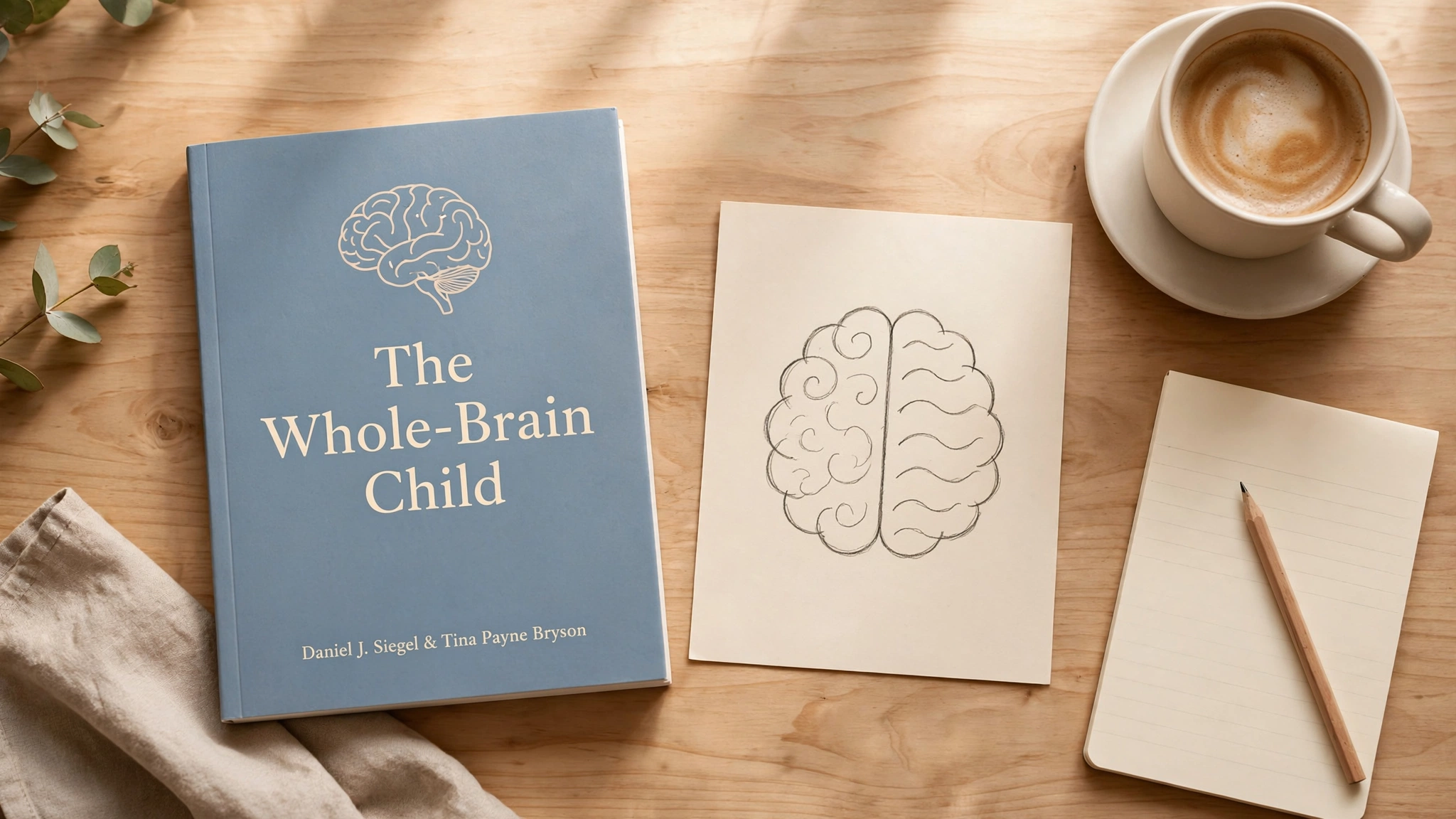
1. The Whole-Brain Child
By Daniel J. Siegel & Tina Payne Bryson
This book breaks down, in plain language, what’s actually happening in your child’s brain during a tantrum — and why logic rarely works in the middle of one. Siegel and Bryson introduce 12 practical strategies for nurturing your child’s developing mind, built around the idea of integrating the “upstairs brain” (logic, reasoning) with the “downstairs brain” (raw emotion).
Why parents love it:
- Turns abstract neuroscience into simple, usable parenting moves
- Includes illustrated strategies you can literally tape to your fridge
- Works for a wide age range, from toddlers to teens
2. How to Talk So Kids Will Listen & Listen So Kids Will Talk
By Adele Faber & Elaine Mazlish
Decades after its first release, this remains one of the most recommended communication guides for parents — and for good reason. Rather than offering vague advice like “be more patient,” it gives word-for-word scripts for handling common flashpoints: sibling rivalry, refusal to get dressed, homework battles, and more.
Why parents love it:
- Comic-style illustrations make dense advice easy to skim
- Practical scripts you can start using immediately
- Frequently cited by teachers and family therapists, not just parenting bloggers
3. Parenting from the Inside Out
By Daniel J. Siegel & Mary Hartzell
This one is less about managing your child’s behavior and more about examining your own. Siegel and Hartzell argue that how you were parented directly shapes how you parent — often in ways you don’t notice until you’re triggered by your own child’s behavior. The book combines attachment research with reflective exercises to help parents break unhelpful cycles.

Why parents love it:
- Focuses on the parent’s emotional patterns, not just the child’s behavior
- Grounded in attachment theory and interpersonal neurobiology
- Especially valuable for parents working through their own difficult childhoods
4. Good Inside
By Dr. Becky Kennedy
Dr. Becky Kennedy built a massive following by reframing “misbehavior” as a skill gap rather than a character flaw. Good Inside combines this philosophy with concrete boundary-setting language — showing parents how to stay warm and firm at the same time, instead of choosing between permissiveness and punishment.

Why parents love it:
- Balances compassion with clear, consistent boundaries
- Reframes common “problem behaviors” in a way that reduces parental guilt
- Offers specific phrases for common conflict moments
5. How to Raise an Adult
By Julie Lythcott-Haims
Written by a former Stanford dean of freshmen, this book tackles a different problem: overparenting. Lythcott-Haims draws on years of watching capable, high-achieving students struggle with basic independence — and lays out how to raise kids who can problem-solve, handle failure, and function without a parent managing every detail.
Why parents love it:
- Addresses overscheduling, overparenting, and helicoptering directly
- Backed by firsthand experience with thousands of college students
- Especially useful for parents of school-age and teen children
How to Choose the Right Book for Your Family
Not every book fits every stage. Use this quick guide to prioritize:
- Toddler meltdowns and tantrums → Start with The Whole-Brain Child
- Daily power struggles (getting dressed, homework, siblings) → How to Talk So Kids Will Listen
- Repeating patterns from your own childhood → Parenting from the Inside Out
- Struggling to set boundaries without guilt → Good Inside
- Raising an independent tween or teen → How to Raise an Adult
If you only have time to read one, choose the book that matches the challenge you’re facing right now — you can always come back for the rest.
Frequently Asked Questions
What is the most recommended parenting book overall?
The Whole-Brain Child and How to Talk So Kids Will Listen are the two most consistently recommended titles across therapist and parenting-expert reading lists.
Are these books suitable for parents of teenagers?
Yes. The Whole-Brain Child, How to Talk So Kids Will Listen, and How to Raise an Adult all include strategies specifically for older children and teens.
Do I need to read these books in order?
No. Each book stands alone, so you can start with whichever one matches your current parenting challenge.
Are these books based on real research, or just opinion?
All five are written by psychologists, researchers, or professionals with direct clinical or academic experience in child development, not just personal anecdotes.
Can these books help with parental burnout too?
Indirectly, yes. Parenting from the Inside Out and Good Inside both address the parent’s own emotional regulation, which is closely tied to burnout.
Final Thoughts
You don’t need a stack of 20 parenting books to become a more confident, connected parent — you need the right few, read at the right time. Start with whichever title above matches the challenge you’re facing today, keep the scripts and strategies handy, and revisit the others as your child grows into new stages. Small, research-backed changes in how you respond in the moment tend to add up to the biggest long-term shifts in your relationship with your child.
