


Lessons From the Story of Barabbas
The lessons from the story of Barabbas are among the most personal in all of Scripture — because Barabbas is us. He was a guilty prisoner who walked free while an innocent man died in his place. Maybe you have read this story many times without realizing it is a living picture of the gospel: Jesus took Barabbas’s cross, and He took yours too.
Barabbas appears only briefly in the Gospels, yet his story carries the whole message of Christianity in miniature: the guilty set free, the innocent condemned, grace given to the undeserving. Every lesson here is really about what Jesus did for you.
Below you will find the story retold, seven powerful lessons drawn from it, and ways to apply them today.
The Story of Barabbas
Barabbas was a notorious prisoner in Jerusalem — “a robber” (John 18:40) who “lay bound with them that had made insurrection with him, who had committed murder in the insurrection” (Mark 15:7). He was awaiting the punishment his crimes deserved, likely execution.
During the Passover feast, the Roman governor Pilate had a custom of releasing one prisoner chosen by the crowd. Hoping to free Jesus — whom he knew was innocent — Pilate offered the people a choice: “Whom will ye that I release unto you? Barabbas, or Jesus which is called Christ?” (Matthew 27:17).
Stirred up by the chief priests, the crowd shouted for Barabbas. “The governor answered and said unto them, Whether of the twain will ye that I release unto you? They said, Barabbas” (Matthew 27:21). Pilate washed his hands of the decision — and the exchange was made:
“Then released he Barabbas unto them: and when he had scourged Jesus, he delivered him to be crucified.” — Matthew 27:26
The guilty man walked out of prison a free man. The innocent man walked to a cross. And that is the gospel in a single scene. For deeper study, see this Bible study on Barabbas and what Barabbas teaches about God’s justice.
7 Lessons From the Story of Barabbas
1. We Are All Barabbas
“For all have sinned, and come short of the glory of God;” — Romans 3:23
Barabbas was guilty of rebellion and murder — but Scripture says we all stand guilty before God. Like Barabbas, we were locked in a prison we could not escape: the prison of sin. His story is our story. The only difference is the details of our crimes, not the verdict.
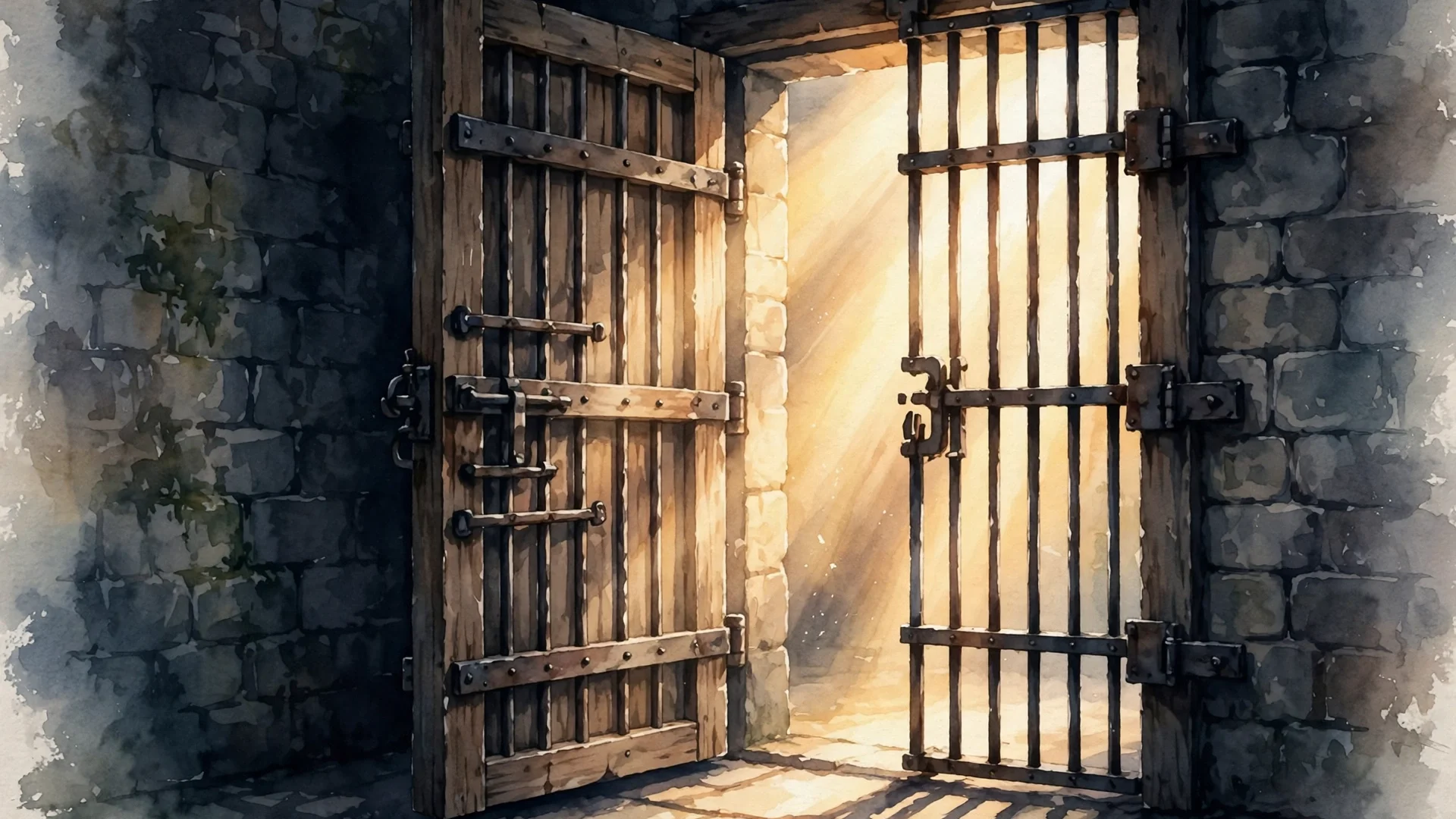
The guilty walked free — grace found him in his cell.
2. Jesus Took Our Place — the Great Exchange
“For he hath made him to be sin for us, who knew no sin; that we might be made the righteousness of God in him.” — 2 Corinthians 5:21
This is the heart of the story: the innocent died so the guilty could live. Isaiah foretold it: “he was wounded for our transgressions… and with his stripes we are healed” (Isaiah 53:5). Barabbas’s cross stood ready — and Jesus climbed onto it instead. He did the same for you.
3. Grace Is Completely Undeserved
“For by grace are ye saved through faith; and that not of yourselves: it is the gift of God: Not of works, lest any man should boast.” — Ephesians 2:8-9
Barabbas did nothing to earn his freedom. He didn’t repent first, clean himself up, or promise to do better. Grace found him locked in a cell. Your salvation works the same way — it is a gift, not a wage. Stop trying to earn what Jesus already gave.
4. Beware the Danger of Following the Crowd
“Thou shalt not follow a multitude to do evil; neither shalt thou speak in a cause to decline after many to wrest judgment:” — Exodus 23:2
The crowd demanded Barabbas because “the chief priests moved the people” (Mark 15:11). Days earlier, crowds had shouted “Hosanna” to Jesus; now they shouted “Crucify him.” Crowds are fickle. Don’t let popular opinion — on social media or anywhere else — decide your convictions. Think for yourself, and stand with truth.
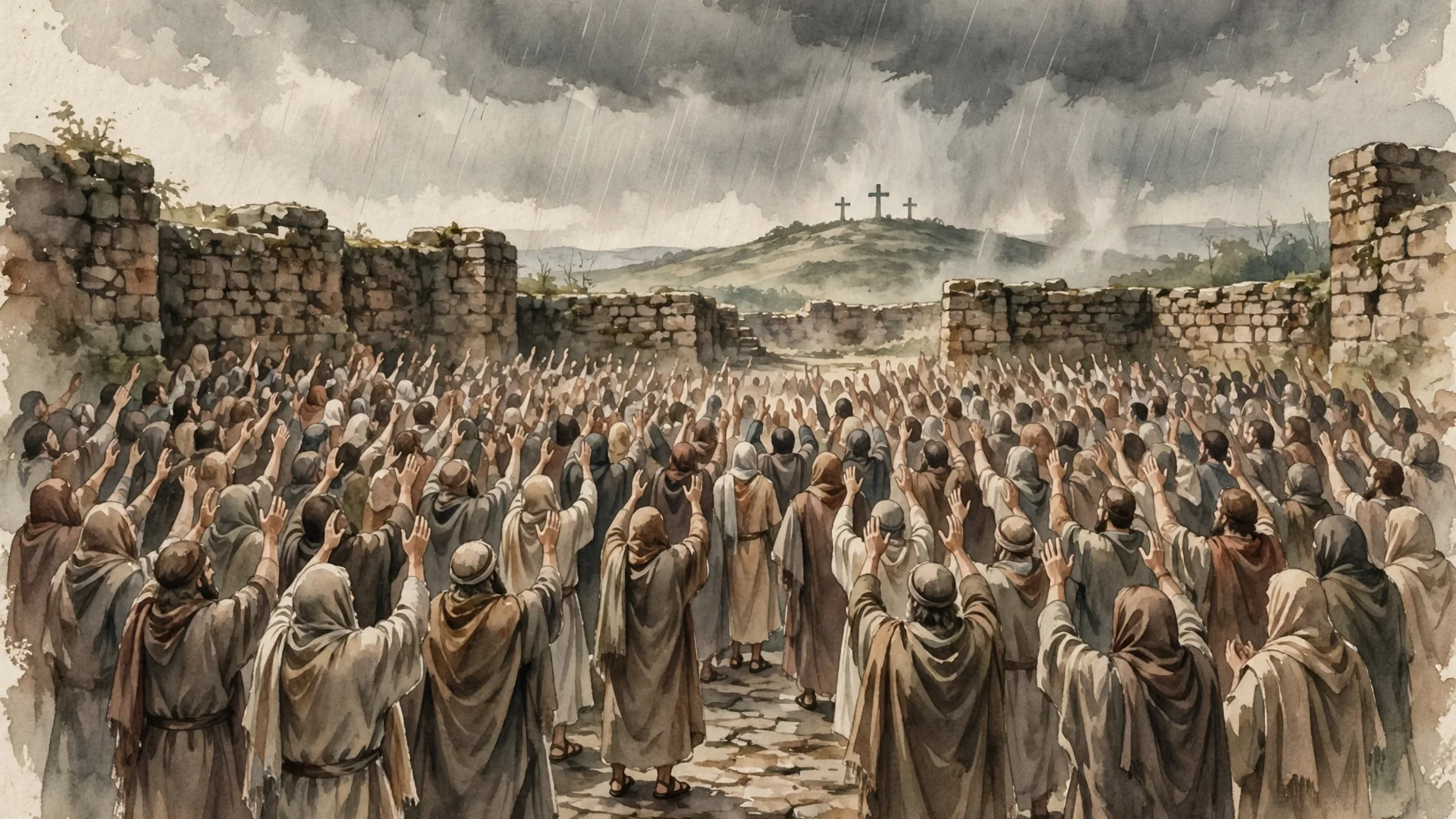
They chose Barabbas — beware the voice of the crowd.
5. Human Justice Fails, but God’s Plan Prevails
“Him, being delivered by the determinate counsel and foreknowledge of God, ye have taken, and by wicked hands have crucified and slain:” — Acts 2:23
Barabbas’s trial was a mockery of justice: the guilty freed, the innocent condemned. Yet even this injustice served God’s “determinate counsel.” When life feels unfair — when the guilty prosper and the innocent suffer — remember: God is still writing the story, and His plan cannot be stopped by human corruption.
6. Jesus Died Even for Those Who Rejected Him
“But God commendeth his love toward us, in that, while we were yet sinners, Christ died for us.” — Romans 5:8
Barabbas almost certainly never thanked Jesus. The crowd that chose him went on to mock the dying Savior — yet from the cross Jesus prayed, “Father, forgive them; for they know not what they do” (Luke 23:34). Christ’s love is not reserved for the grateful. He died for His enemies — which means there is hope for anyone.
7. Freedom Should Lead to a New Life
“If the Son therefore shall make you free, ye shall be free indeed.” — John 8:36
Barabbas walked out of prison a free man — but Scripture never tells us what he did with his freedom. Here is the question his story leaves with us: what will you do with yours? Grace is not permission to return to the cell; it is power to walk in newness of life. Don’t waste your release.
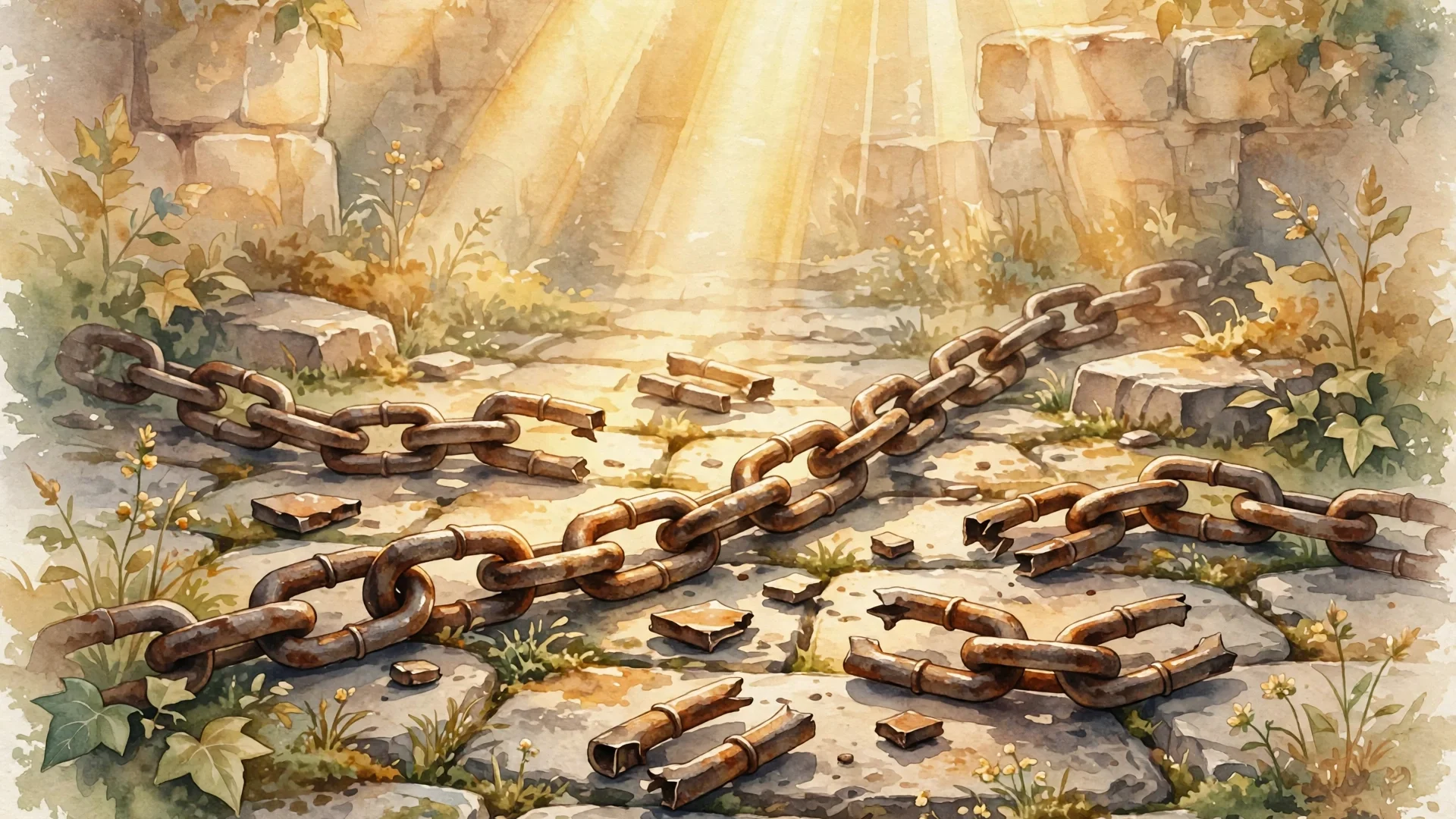
If the Son therefore shall make you free, ye shall be free indeed.
How to Apply These Lessons Today
- See yourself in Barabbas — and be grateful. Regularly remember what you were saved from. Gratitude is the fuel of holiness; entitlement is its enemy. You are Barabbas, set free.
- Stop trying to earn grace. If you catch yourself thinking God’s favor depends on your performance, return to the prison scene: Barabbas contributed nothing to his release. Rest in the finished work of Christ.
- Refuse to follow the crowd into sin. When popular opinion pressures you to compromise, remember the crowd that chose Barabbas. Stand with Jesus, even if you stand alone (Exodus 23:2).
- Extend Barabbas-grace to others. Someone in your life doesn’t “deserve” forgiveness — forgive them anyway. You are a recipient of scandalous grace; become a distributor of it.
- Live like a freed prisoner. Don’t drift back to old chains. Walk in the freedom Christ purchased — in purity, in purpose, in joy. Your release was expensive; honor it with your life.
Frequently Asked Questions
Who was Barabbas in the Bible?
Barabbas was a Jewish prisoner held by Rome for insurrection and murder (Mark 15:7; Luke 23:19; John 18:40). Pilate released him instead of Jesus at the crowd’s demand during Passover (Matthew 27:26).
Why did the crowd choose Barabbas over Jesus?
The chief priests “moved the people” to demand Barabbas (Mark 15:11). Many wanted a political Messiah who would overthrow Rome — Barabbas the rebel fit their expectations better than Jesus the suffering servant.
What does the name Barabbas mean?
Barabbas comes from Aramaic bar-Abba, meaning “son of the father.” Some ancient manuscripts of Matthew 27:16-17 even call him “Jesus Barabbas” — making the choice starkly: Jesus, son of the father, or Jesus, Son of the Father.
What is the main lesson of Barabbas’s story?
Substitution: the guilty goes free because the innocent takes his place. Barabbas is a living picture of every believer — condemned by our sin, released by Christ’s sacrifice (2 Corinthians 5:21).
Did Barabbas ever become a Christian?
The Bible doesn’t say. Scripture is silent about what Barabbas did with his freedom — which leaves each of us with the same question: what will you do with yours?
See Also
Conclusion
Barabbas walked out of his cell into the sunlight, a free man — and Jesus walked toward a cross, carrying Barabbas’s punishment. That exchange is the gospel in miniature, and it is your story too.
You were guilty. The sentence was just. But Another took your place, and now you walk free — not because of anything you did, but because of everything He did.
Don’t waste your freedom. Live gratefully. Forgive freely. And tell everyone you meet about the innocent Man who took the guilty prisoner’s place — because that prisoner was you, and that Man was Jesus.
