



Moses Trusting God at the Red Sea
Moses trusting God at the Red Sea is the Bible’s greatest picture of faith in an impossible situation. Two million Israelites stood trapped: the Red Sea in front of them, Pharaoh’s army thundering behind them. No bridge, no boats, no way out — except through the God who had just shattered Egypt with ten plagues.
What Moses did next has echoed through three thousand years of faith: “Fear ye not, stand still, and see the salvation of the LORD… The LORD shall fight for you, and ye shall hold your peace” (Exodus 14:13-14). Then he stretched out his hand, the sea split, and God’s people walked through on dry ground.
Below you’ll find the full story, the key verses, five lessons for trusting God when you’re trapped, and answers to common questions. Your Red Sea has a God who parts seas.
Table of Contents
What Happened at the Red Sea?
What happened at the Red Sea? At the Red Sea, God miraculously parted the waters so the Israelites could escape Pharaoh’s army. Trapped between the sea and Egypt’s chariots, Moses told the people to stand still and see God’s salvation (Exodus 14:13-14). God sent a strong east wind all night that divided the sea; Israel walked through on dry ground with walls of water on both sides, and when the Egyptians pursued, the waters collapsed and destroyed them (Exodus 14:21-28).
This event — the Exodus climax — became Israel’s defining memory of God’s power, celebrated in song (Exodus 15), recalled by prophets (Isaiah 43:16), and held up as faith’s triumph in Hebrews 11:29. It proves that no situation is too impossible for God. For a deeper study, see why God parted the Red Sea.
The Story: Moses Trusting God at the Red Sea
Trapped Between the Sea and the Army (Exodus 14:1-12)
Fresh out of Egypt after the Passover, Israel camped by the sea at God’s strange command — a location that looked like a military blunder. Pharaoh, regretting he let his slave workforce go, mobilized 600 elite chariots plus his full army. When Israel saw the dust clouds of the approaching Egyptians, panic erupted: “Because there were no graves in Egypt, hast thou taken us away to die in the wilderness?” (Exodus 14:11). They preferred slavery to uncertainty — a temptation every believer knows. The lesson: God sometimes leads you into impossible places on purpose, so the deliverance is unmistakably His.
“Stand Still, and See the Salvation of the LORD” (Exodus 14:13-14)
“And Moses said unto the people, Fear ye not, stand still, and see the salvation of the LORD, which he will shew to you to day: for the Egyptians whom ye have seen to day, ye shall see them again no more for ever. The LORD shall fight for you, and ye shall hold your peace.” — Exodus 14:13-14
This is one of the greatest speeches in the Bible — and Moses gave it while an army bore down on terrified people. Four commands: fear not (reject panic), stand still (stop striving), see (watch expectantly), and hold your peace (let God fight). Moses had no plan, no backup, no idea how God would save them — only unshakable confidence that He would. That’s what trusting God looks like: obedience without a blueprint. The lesson: when you can’t see the way, your job is trust; the way-making is God’s job.
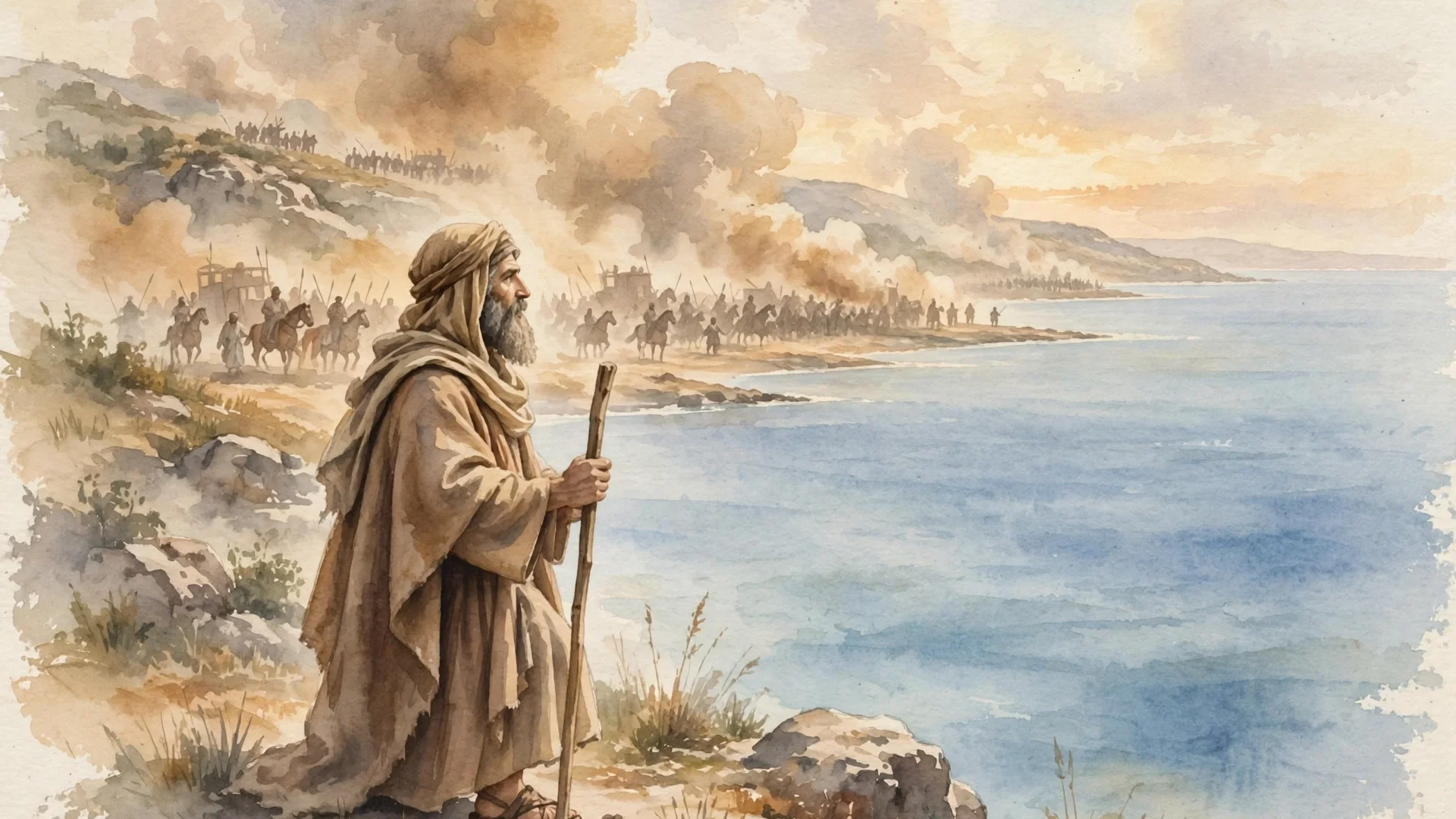
Fear not, stand still — and see the salvation of the Lord.
The Sea Parts (Exodus 14:15-22)
“And Moses stretched out his hand over the sea; and the LORD caused the sea to go back by a strong east wind all that night, and made the sea dry land, and the waters were divided. And the children of Israel went into the midst of the sea upon the dry ground: and the waters were a wall unto them on their right hand, and on their left.” — Exodus 14:21-22
God told Moses: tell the people to move forward, then stretch out your hand. Note the order — faith acts before it sees. All night, a strong east wind drove the waters back. Picture it: walls of water towering on both sides, a nation of two million — elderly, children, livestock — walking between them on dry ground. Meanwhile, the pillar of cloud moved behind Israel, giving them light while plunging Egypt into darkness. God literally stood between His people and their enemy. The lesson: God’s deliverance is thorough — He doesn’t just open the way, He guards your back while you walk it.
The Waters Return (Exodus 14:23-28)
Pharaoh’s army charged into the seabed in pursuit — chariots, horsemen, the full might of Egypt. But God “took off their chariot wheels” and threw the army into confusion; even the Egyptians confessed, “Let us flee from the face of Israel; for the LORD fighteth for them against the Egyptians” (Exodus 14:25). At dawn, Moses stretched out his hand again, and the walls of water collapsed. The entire Egyptian army — “there remained not so much as one of them” (Exodus 14:28). The sea that saved Israel swallowed Egypt. The lesson: the very thing God uses to deliver you will be the thing that defeats your enemy. Your Red Sea is someone’s grave and your doorway.
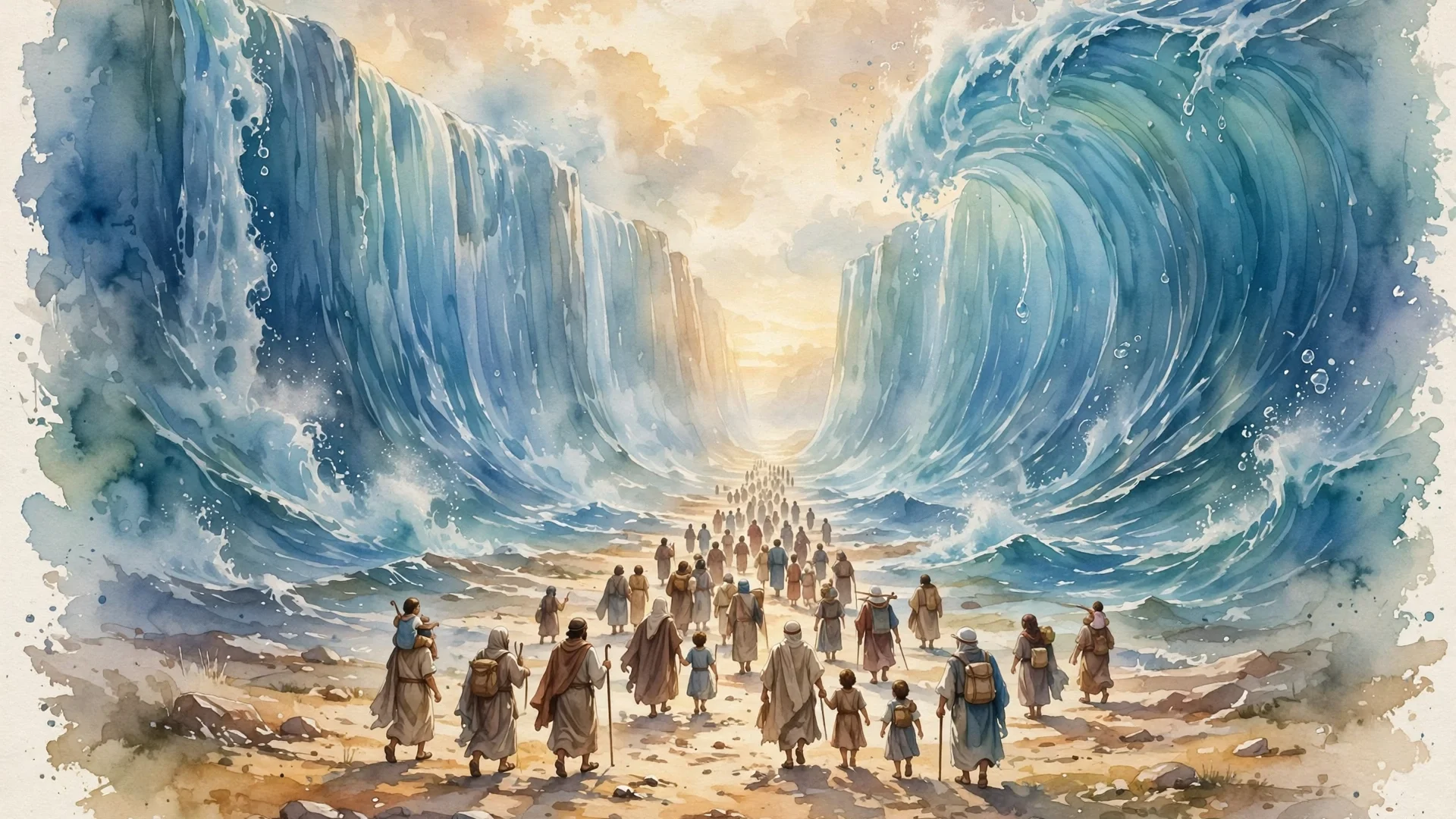
Through the sea on dry ground — walls of water on the right and on the left.
The Song of Victory (Exodus 14:29-15:21)
“The LORD is my strength and song, and he is become my salvation: he is my God, and I will prepare him an habitation; my father’s God, and I will exalt him.” — Exodus 15:2
Safe on the far shore, Israel saw the Egyptians “dead upon the sea shore” — and “the people feared the LORD, and believed the LORD, and his servant Moses” (Exodus 14:31). Then Moses led them in the Song of the Sea, the Bible’s first recorded hymn: “Who is like unto thee, O LORD, among the gods? who is like thee, glorious in holiness, fearful in praises, doing wonders?” (Exodus 15:11). Miriam took a timbrel and led the women in dancing. Terror turned to worship — as it always does when God shows up. The lesson: every Red Sea ends in a song. Your current trial is composing your future testimony.
Key Verses at a Glance
| Reference | Verse (Summary) | Key Truth |
|---|---|---|
| Exodus 14:13-14 | “Fear ye not, stand still… The LORD shall fight for you” | Trust means letting God fight |
| Exodus 14:21-22 | The sea divided; Israel walked on dry ground | God makes a way where there is none |
| Exodus 14:25 | “The LORD fighteth for them against the Egyptians” | Even enemies recognize God’s hand |
| Exodus 14:31 | The people feared and believed the LORD | Deliverance deepens faith |
| Exodus 15:2 | “The LORD is my strength and song” | Victory turns to worship |
| Hebrews 11:29 | “By faith they passed through the Red sea” | It was faith, not luck |
| Isaiah 43:16 | God “maketh a way in the sea” | Way-making is His specialty |
5 Lessons for Trusting God in Impossible Situations
- Don’t panic — God’s got the map. Israel’s terror was understandable but unnecessary; God had planned the route before they ever left Egypt. When you’re trapped, remember: your Red Sea is part of His itinerary, not a detour from it.
- Stand still before you move forward. Moses said “stand still” and God said “go forward” (Exodus 14:15) — first still your heart, then move your feet. Panicked motion isn’t faith; surrendered obedience is.
- Let God fight for you. “The LORD shall fight for you, and ye shall hold your peace.” Some battles are won by striving; Red Sea battles are won by trusting. Know which kind you’re in.
- Walk through — don’t just stand at the shore. God parted the sea, but Israel still had to walk through it — all night, between walls of water. Faith takes the first step into the impossible and keeps walking.
- Sing on the other side. Don’t rush past your Red Sea without a song. Testimony is how today’s miracle becomes tomorrow’s faith — for you and for everyone who hears it.
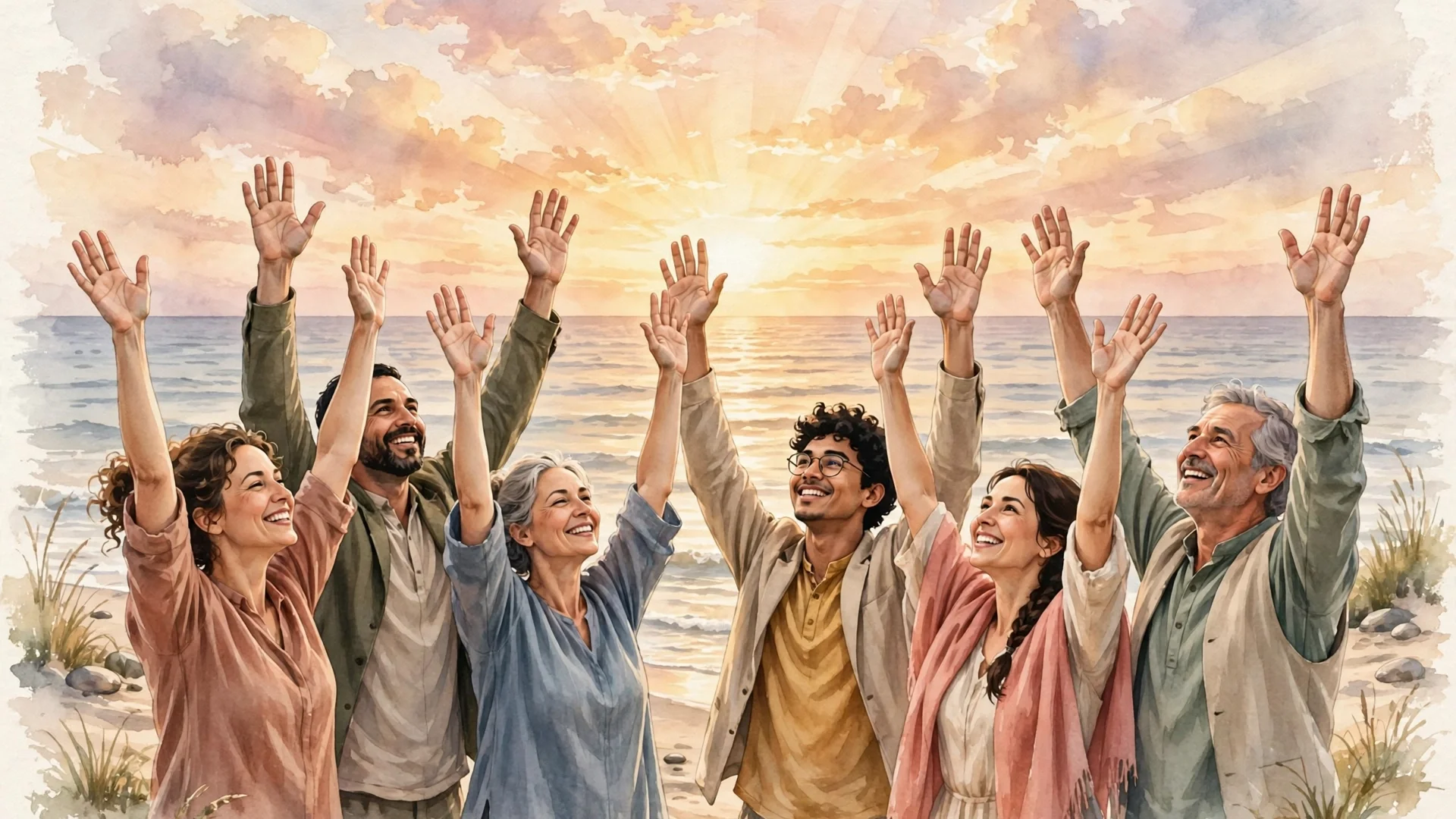
Safe on the far shore — every Red Sea ends in a song.
Frequently Asked Questions
How did Moses part the Red Sea?
God did it through Moses’ obedience: “Moses stretched out his hand over the sea; and the LORD caused the sea to go back by a strong east wind all that night” (Exodus 14:21). Moses’ staff didn’t part the sea — God’s power did, in response to Moses’ faithful action.
What does “stand still and see the salvation of the Lord” mean?
It means to stop panicking and striving, and watch expectantly for God to act (Exodus 14:13). It’s not passivity — Israel still had to walk through the sea — but it puts the outcome in God’s hands instead of ours. Stillness is faith’s first move.
Why did God lead Israel to the Red Sea if He knew Pharaoh would come?
God intentionally positioned Israel where only He could save them, so that Egypt — and Israel — would know “that I am the LORD” (Exodus 14:18). Impossible situations showcase God’s glory like nothing else.
What does the Red Sea teach us about trusting God?
That trust means obeying without a blueprint (Moses stretched out his hand before the sea split), letting God fight your battles (Exodus 14:14), and walking forward in faith even when the walls of water tower on both sides.
Is the Red Sea crossing mentioned in the New Testament?
Yes — Hebrews 11:29 says “by faith they passed through the Red sea as by dry land,” listing it among faith’s greatest triumphs. Paul also calls it a baptism into Moses (1 Corinthians 10:1-2), picturing our own passage from bondage to freedom in Christ.
See Also
- How to Stand Firm in Faith Like Daniel
- Spiritual Warfare for Christians Real Enemy
- Bible Verses for Spiritual Warfare
Conclusion
Moses stood between a sea and an army with nothing but a staff and a promise — and that was enough. Because the God who called him was the God who parts seas, the God who fights for His people, and the God who turns dead ends into doorways.
Your Red Sea may be a diagnosis, a debt, a broken dream. The waters look deep and the enemy looks close. But the same voice that said “stand still” still speaks: fear not, hold your peace, and watch.
Stretch out your hand in faith. Walk through on dry ground. And get ready to sing — because the Lord is your strength and your song.
